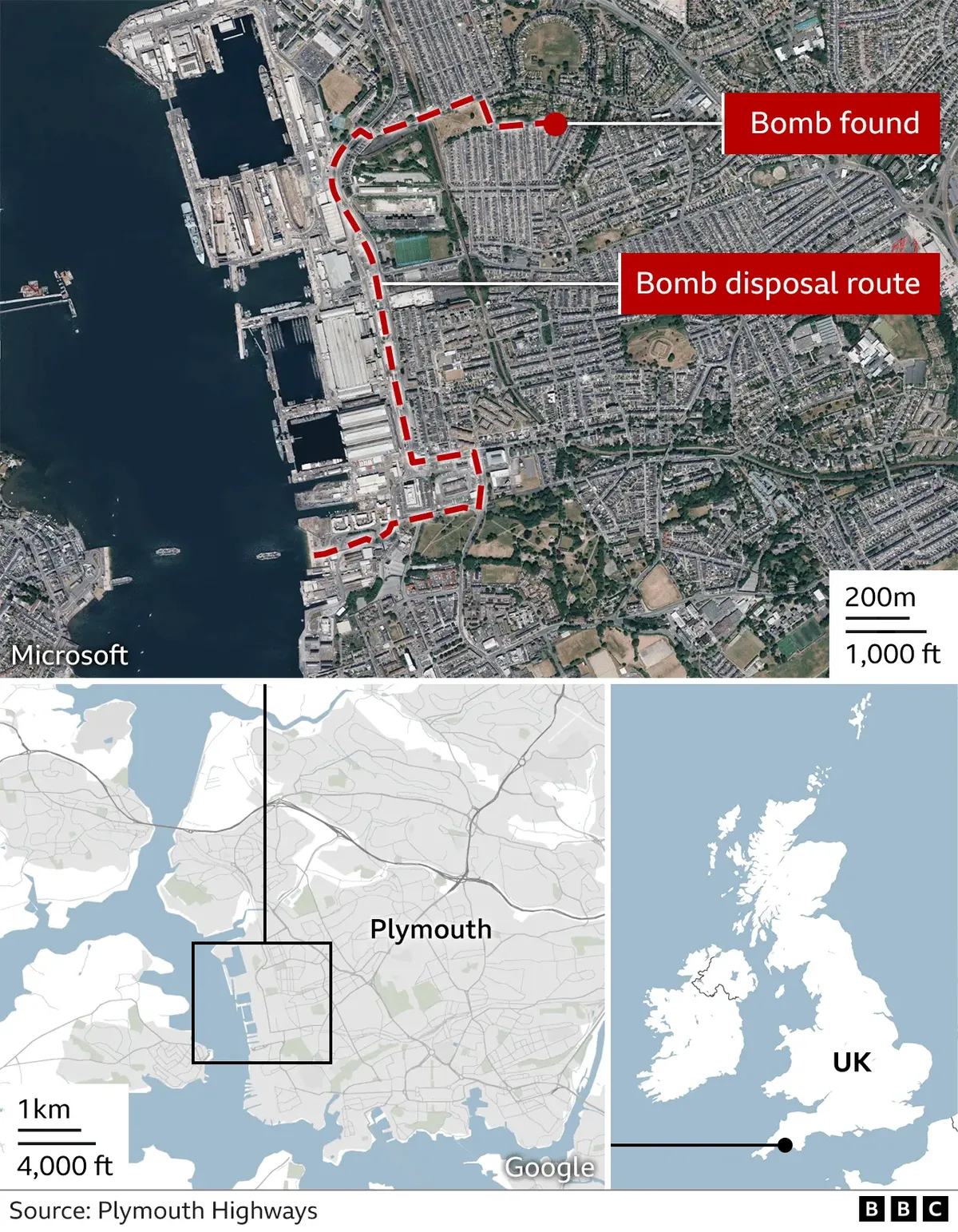
A historic World War Two bomb in Plymouth was successfully detonated on May 1, 2026 after evacuating over 1,200 homes. The bomb, a 250kg German SC250 air-dropped weapon, was discovered on a building site and deemed too unstable to move.
Approximately 1,260 households were evacuated within a 400-metre cordon. Residents were advised to leave windows open and turn off water before the explosion. An evacuation centre was set up at the Southway Youth and Community Centre to assist those displaced.
This incident underscores the ongoing dangers of unexploded ordnance from past conflicts. The SC250 bomb is a reminder of World War Two’s lasting legacy, as remnants of such devices occasionally surface during construction projects.
The controlled explosion took place at around 8:15 am. To mitigate the impact of the blast, authorities placed 450 tonnes of sand around the bomb. Despite these precautions, debris scattered across the area following the detonation.
The operation led to the temporary closure of three local schools as safety measures were enforced. Smoke was visible in the vicinity post-detonation, prompting immediate assessments by emergency services.
Councillor Sally Haydon expressed gratitude towards the bomb disposal teams for their diligent efforts. She stated, “Our heartfelt thanks go to the brave Army and Royal Navy unexploded ordnance specialists who have worked tirelessly over recent days.” A local resident described the event: “There was a big, big bang; you couldn’t miss this one.”
Colonel Nick Handy also commented on the operation’s risks. He noted, “We have to be realistic; when that thing goes ‘bang’, there will be damage.” This statement highlights the inherent dangers associated with handling such explosives.