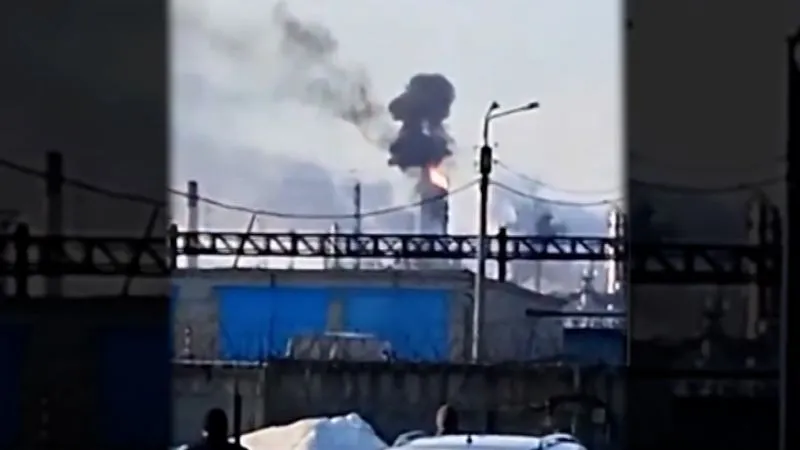
The Tuapse oil refinery has been struck by Ukrainian drones for the fourth time on May 1, 2026, reigniting fires and causing significant environmental damage. These ongoing attacks raise crucial questions about the vulnerability of Russian oil infrastructure.
Ukrainian forces have intensified their drone attacks, with at least 21 recorded strikes on Russian oil facilities just in April. The Tuapse refinery, processing around 12 million tons of oil annually, is emblematic of this broader strategy.
What led to this surge in attacks? Since Russia’s full-scale invasion of Ukraine over four years ago, Ukrainian forces have targeted key Russian assets. The recent strikes highlight the escalating nature of the conflict and Russia’s struggle to protect its critical infrastructure.
This latest assault resulted in 24 storage tanks destroyed and four more damaged from previous strikes. Local authorities declared a state of emergency following the third attack, underscoring the severity of the situation. Meanwhile, Russia’s Emergency Situations Ministry reported extinguishing fires just days before this latest attack.
Residents in Tuapse have witnessed chaos; explosions and gunfire erupted during the May 1 strike as local air defense units intercepted at least 10 drones. This reflects a significant escalation in Ukraine’s operational capabilities and its willingness to strike deep into Russian territory.
The environmental fallout from these attacks has made Tuapse unsafe for visitors, with reports of airborne petroleum byproducts contaminating the area. As one local described, “The environmental fallout — including airborne petroleum byproducts and oil spills on city streets — has made the once attractive tourist destination unsafe for visitors.”
In response to these increasing tensions, President Putin proposed a temporary truce during the upcoming May 9 holiday. However, it remains unclear whether this will lead to any meaningful cessation of hostilities or if it’s merely a strategic pause amidst ongoing conflict.
The situation continues to evolve with each drone strike. Local residents reported that at least 141 drones were shot down across Russia overnight during these incidents, indicating a high level of defensive activity.
The implications of these attacks extend beyond immediate damage. With Russia’s average refinery capacity now reduced to 4.69 million barrels per day, its lowest since December 2009, the economic impact could be profound—especially as sanctions continue to bite.
This cycle of violence raises urgent questions: How long can this infrastructure withstand continued assaults? And what will be the long-term consequences for both Ukrainian and Russian strategies?