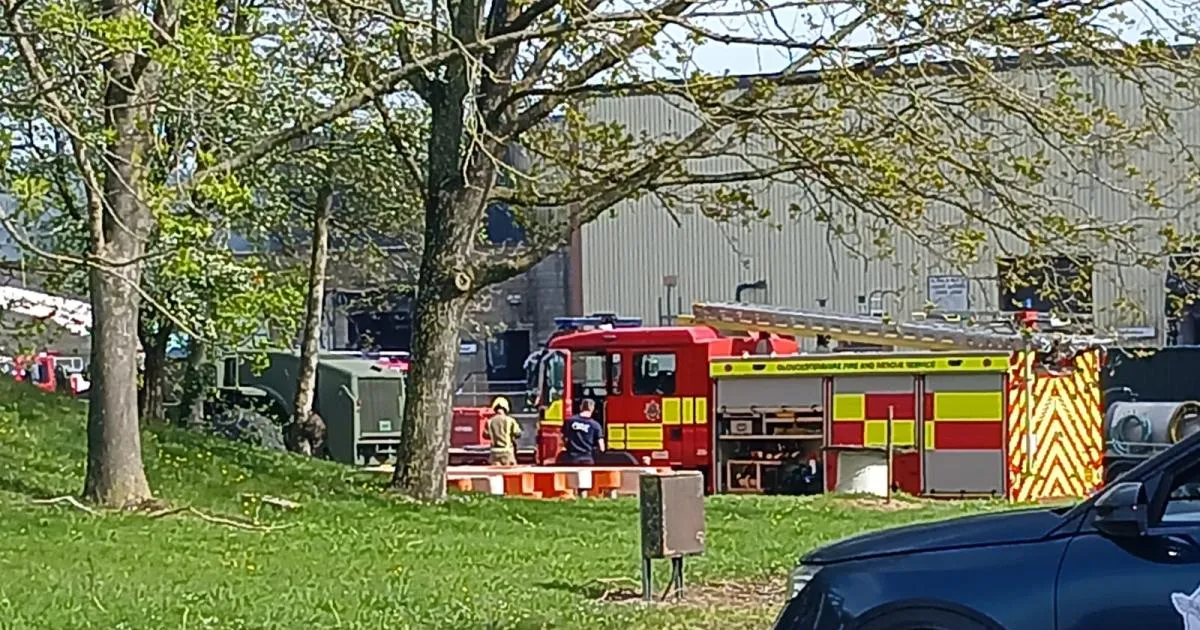
A fire at RAF Fairford—a base used by the U.S. Air Force—broke out early on April 26 in a disused building. Fortunately, no injuries were reported. Firefighters from the Gloucestershire Fire and Rescue Service responded swiftly to the scene shortly before 2 a.m. local time.
The blaze involved a single-story industrial storage building that was already out of use. Crews worked throughout the morning to ensure safety and containment, with officials stating that the fire posed no risk to either the base’s personnel or the surrounding community.
According to the 501st Combat Support Wing Public Affairs, “There were no injuries sustained; the fire has been contained and currently poses no risk to the base or local community.” This reassurance is crucial, especially considering the ongoing tensions surrounding Iran war operations where this base plays a pivotal role.
Residents nearby were advised to keep their doors and windows closed due to smoke from the incident. The cause of the fire is believed to be accidental, although an investigation is ongoing—this is not uncommon in such situations.
RAF Fairford has served as a strategic location for U.S. military operations since its establishment for D-Day in 1944. Its continued use underscores its importance in current defensive operations against threats like Iran.
Interestingly, while firefighters tackled this blaze, around 200 protesters gathered outside the base, expressing dissent related to U.S. military actions abroad. This protest highlights ongoing public concern; recent surveys indicate that 65% of Britons disapprove of U.S. strikes in conflict zones.
Moreover, as worries about rising energy prices linked to these conflicts grow—86% of people are concerned—local sentiment remains divided over military engagements.
The situation remains fluid as officials have not disclosed whether this incident will affect operational activity at RAF Fairford moving forward. Observers will be keenly watching how this event unfolds amid broader geopolitical tensions.