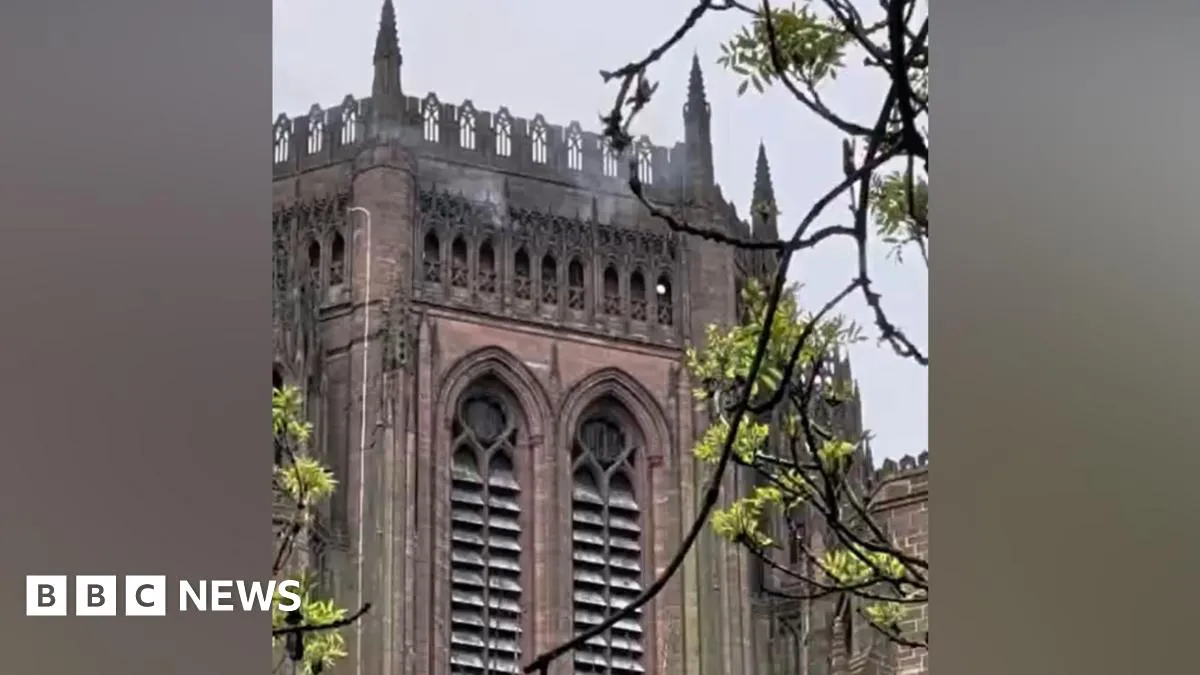
On a recent afternoon, firefighters responded to a blaze at Liverpool Anglican Cathedral, the largest cathedral in Britain. The fire, which broke out at the top of the cathedral’s tower, caused immediate evacuations and prompted authorities to warn residents and tourists to steer clear of the area.
The fire was reported at 2:44 PM, and crews arrived on scene just five minutes later. By 3:22 PM, they had extinguished the main body of the fire. Fortunately, no injuries were reported during this incident. However, the cause—determined to be electrical—raises questions about fire safety protocols in such historic structures.
That context matters because Liverpool Anglican Cathedral is not only a significant architectural landmark but also a key site for tourism and daily worship services. Its intricate design attracts thousands of visitors annually, contributing to the local economy.
Experts emphasize that incidents like this can have lasting impacts on public safety perceptions. A spokesman for the Merseyside Fire and Rescue Service stated, “This incident is ongoing; please avoid the area.” This reflects a broader concern regarding how emergencies affect tourism and community engagement with historic sites.
The cathedral’s management acknowledged the disruption caused by the fire. A spokesperson said, “We are aware of the recent fire at our site and apologise for any concern or disruption this incident may have caused.” Such statements are crucial for maintaining public trust in these institutions.
As investigations continue into fire safety measures, it’s essential to consider how this incident might influence future visitor experiences at Liverpool Cathedral. Increased scrutiny on emergency response protocols may lead to enhanced safety features in similar historic buildings.