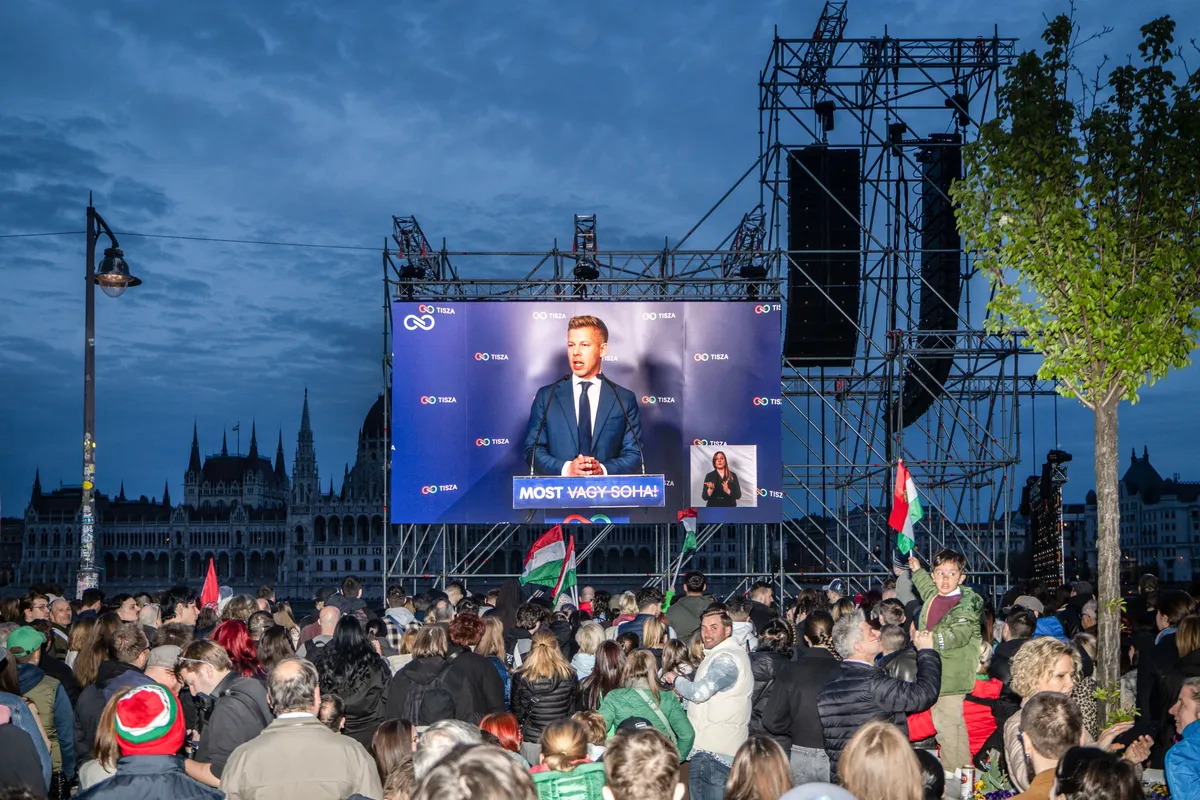
The recent parliamentary election in Hungary has resulted in a historic victory for the Tisza Party, which secured a commanding two-thirds majority. This outcome not only marks a significant shift in the political landscape of Hungary but also concludes Viktor Orbán’s 16-year tenure as Prime Minister, a period characterized by his party’s dominance and controversial governance.
In the election held on April 12, 2026, the Tisza Party won 138 out of 199 seats in parliament, a remarkable achievement that underscores the changing political sentiments among Hungarian voters. The voter turnout was nearly 80%, with a notable mobilization of young voters, many of whom were determined to vote against Orbán’s Fidesz party. This demographic shift is particularly significant, as 65% of voters under 30 expressed their intention to support the Tisza Party.
Viktor Orbán’s Fidesz party faced a crushing defeat, managing to secure fewer than 15 individual seats, a stark contrast to their previous dominance. The election results prompted immediate reactions from various European leaders, indicating a broader concern about the rise of far-right movements in Hungary and across Europe. Péter Magyar, the leader of the Tisza Party, has pledged to repair Hungary’s relationship with the European Union and tackle issues of corruption that have plagued the country.
Magyar’s campaign was marked by a focus on grassroots support and addressing public service needs, resonating with voters who felt neglected under Orbán’s administration. The Tisza Party’s super-majority not only allows them to govern effectively but also provides the potential to amend the constitution, raising questions about the future legislative direction of Hungary.
The election was closely monitored internationally, seen as a test case for the far-right movement in Europe. Allegations of Russian interference and attempts to discredit the Tisza Party were prominent during the campaign, adding a layer of complexity to the electoral process. Despite these challenges, Tisza supporters celebrated their victory, with many expressing hope for a new political era in Hungary.
Viktor Orbán acknowledged the election results, stating, “I congratulated the victorious party,” a rare moment of concession from a leader known for his firm grip on power. Meanwhile, Péter Magyar declared, “Tonight, truth prevailed over lies,” reflecting the sentiments of many who supported the Tisza Party. The atmosphere among Tisza supporters was one of triumph, with chants of “We did it!” echoing through the streets.
As Hungary embarks on this new political journey, uncertainties remain regarding the implementation of Magyar’s promises and the potential backlash from Orbán’s supporters. The future of Hungary’s governance and its relationship with the EU will be closely watched in the coming months. Details remain unconfirmed regarding how the Tisza Party plans to navigate these challenges while fulfilling their campaign commitments.