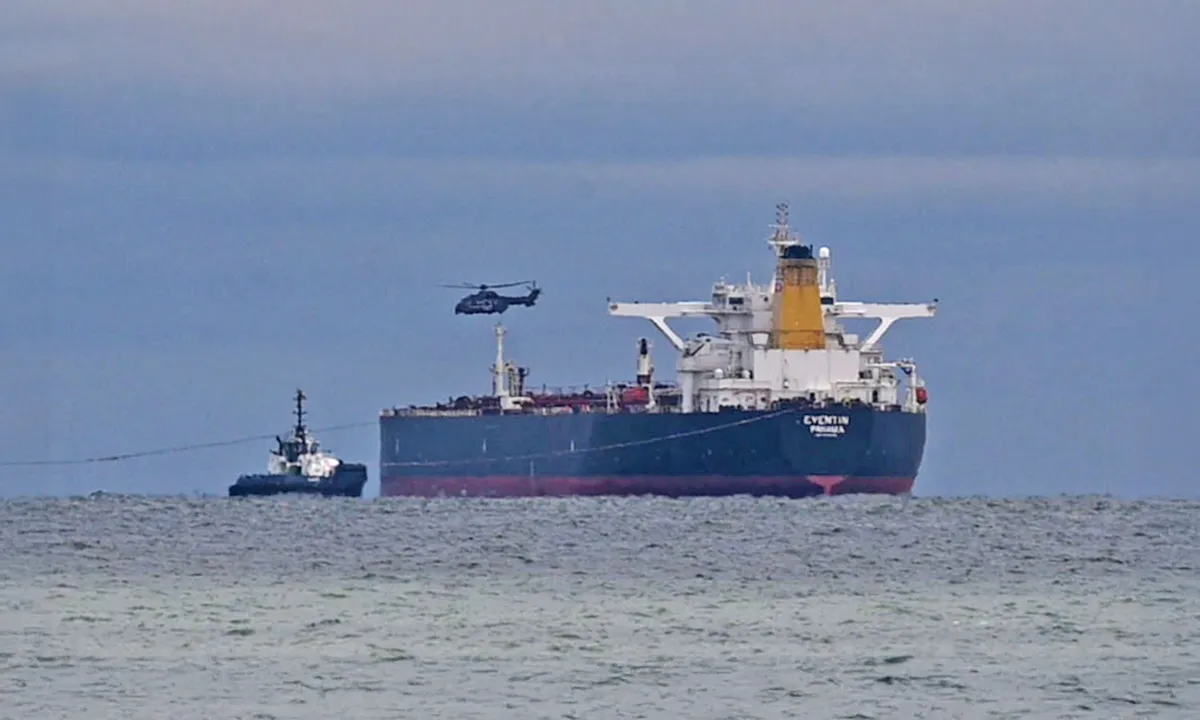
The emergence of the Russian shadow fleet has significant implications for global oil transport and military stability in the English Channel and Baltic Sea. Approximately 75% of Russia’s crude oil is now transported via this clandestine network, raising concerns among European nations about the potential for increased military tensions and economic repercussions.
In response to escalating threats, Ukraine has reportedly prepared plans for terrorist attacks targeting Russian ships operating in the Barents and Norwegian Seas. This development underscores the high stakes involved as nations grapple with the shadow fleet’s impact on maritime security and international relations.
The British government has taken proactive measures by escorting oil and gas tankers with armed warships, a move that reflects the urgency of the situation. Meanwhile, France has introduced a bill imposing severe penalties for vessels associated with the Russian shadow fleet, including fines up to €300,000 and prison sentences of up to seven years if lives of French military personnel are endangered.
Despite these efforts, the Royal Navy has not intercepted any Russian tankers under sanctions, raising questions about the effectiveness of current strategies. Furthermore, the number of idle tankers at Vaindloo Anchorage has tripled recently, with estimates now between 30 to 40 vessels, indicating a growing reliance on this shadow fleet.
Estonia has opted not to detain vessels associated with the Russian shadow fleet, citing the risk of military escalation. This cautious approach highlights the delicate balance European nations must maintain in addressing the shadow fleet while avoiding provocation that could lead to conflict.
In a show of force, Moscow has initiated a permanent patrol of armed military vessels in the Gulf of Finland, signaling its commitment to protecting its maritime interests. Andrei Kelin, the Russian ambassador to the UK, has warned that any attempts by the British to seize Russian vessels would be deemed “unacceptable and intolerable,” further escalating tensions in the region.
As the situation develops, the Kremlin views sanctions as a malign attempt to undermine its economy, complicating diplomatic efforts. Volodymyr Zelensky, the President of Ukraine, has noted that despite intensifying Russian attacks, the frontline is holding, indicating resilience amid ongoing conflict.
Details remain unconfirmed regarding potential Russian responses to UK actions, leaving the situation precarious. The international community watches closely as the dynamics of the Russian shadow fleet continue to evolve, with implications that could affect global oil markets and regional security for the foreseeable future.