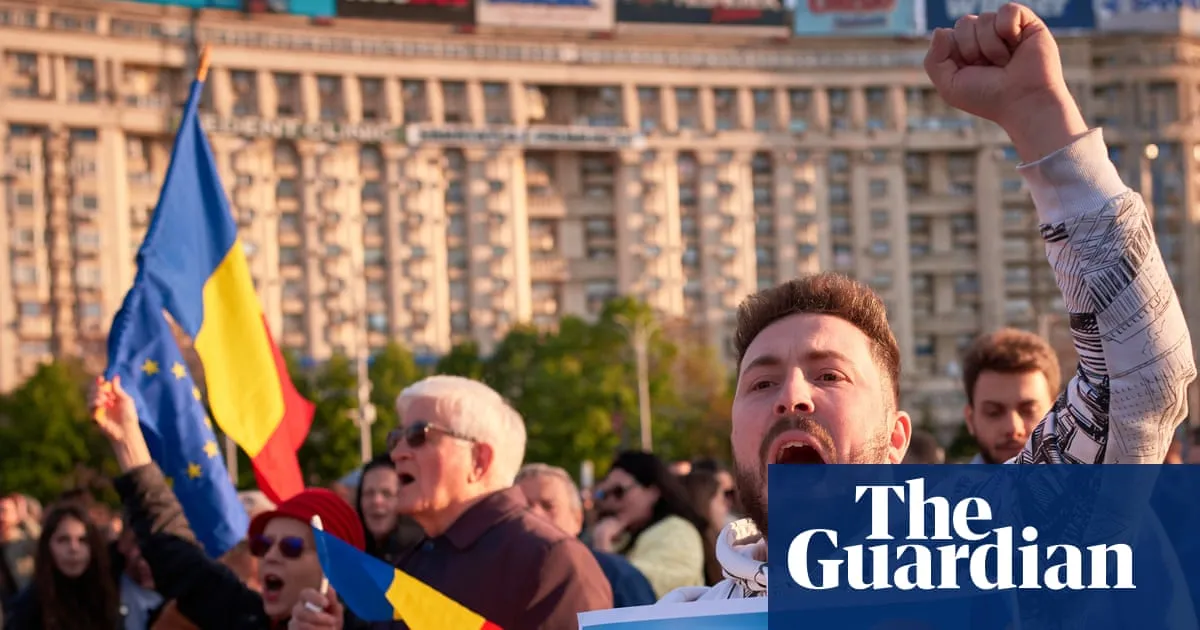
Romania’s pro-European government collapsed on May 5, 2026, after losing a no-confidence vote in parliament. This unexpected turn of events highlights an unusual alliance between the far-right Alliance for the Union of Romanians (AUR) and the Social Democrats (PSD), raising significant concerns in Brussels.
The no-confidence motion garnered 281 votes in Romania’s 464-seat parliament, signaling a dramatic shift in political allegiances. Prime Minister Ilie Bolojan, leading the National Liberal Party (PNL), faced fierce opposition as both AUR and PSD united against him.
This coalition emerged amidst ongoing political turmoil that has plagued Romania since its last parliamentary elections in 2025. At that time, a pro-EU coalition was formed to stabilize governance after months of instability. Yet, here we are again—witnessing a rapid unraveling.
What does this mean for Romania? For starters, AUR has surged ahead in popularity, now commanding about 37% support in polls, surpassing PSD. The political landscape is shifting beneath the feet of traditional parties, and with it comes uncertainty about future governance.
The backdrop of this collapse includes Romania’s troubling budget deficit, which stood at nearly 8% in 2025—the highest in the European Union. Financial instability often breeds political unrest, and this case is no exception.
Nicușor Dan is expected to hold consultations with party leaders to explore options for forming a new coalition government. However, officials have not provided a clear timeline for these discussions or for appointing a new prime minister.
As reactions pour in, Ilie Bolojan described the censure motion as “false, cynical and artificial,” while Sorin Grindeanu remarked that “there is life after the no-confidence vote.” Cătălin Predoiu emphasized the need to keep options open during this turbulent period.
This situation underscores how fragile coalitions can be and how quickly they can dissolve under pressure. With parliamentary elections not scheduled until 2028, Romania faces an extended period of uncertainty regarding its political future.