What the data shows
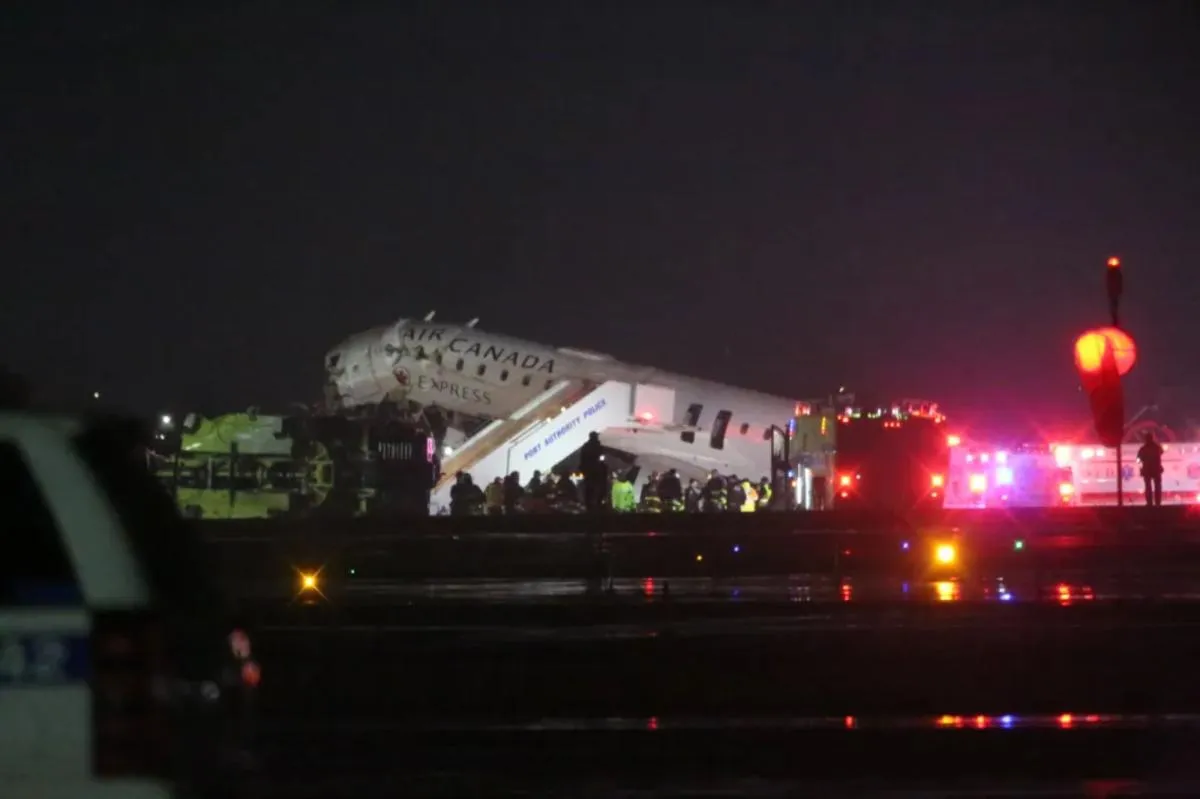
What factors contributed to the tragic plane crash at LaGuardia Airport on March 23, 2026, and what are the implications for aviation safety? An Air Canada passenger plane collided with a rescue truck, resulting in the deaths of two pilots and injuries to 41 others. This incident raises significant questions about airport safety protocols and emergency response measures.
The Air Canada flight, a Bombardier CRJ-900 jet, was landing from Montreal with 72 passengers and four crew members on board. The collision occurred shortly before midnight, as the rescue truck was responding to an unrelated emergency. Eyewitness accounts and air traffic control communications reveal a chaotic scene, with an air traffic controller heard urgently instructing, “Stop, stop, stop, stop!” before the crash occurred. The controller later admitted, “I messed up,” indicating a potential lapse in communication or coordination.
The impact of the collision was devastating, obliterating the front of the Air Canada jet. Among the injured, two Port Authority police officers on the rescue truck were hospitalized with broken bones but are expected to survive. Remarkably, a female flight attendant was thrown through the front of the plane while still in her seat and survived the ordeal. Of the 41 people hospitalized, 32 have since been released, although some are reported to have sustained serious injuries.
The crash led to the closure of LaGuardia Airport for most of the following day, causing widespread travel disruption. Passengers faced significant delays and cancellations, highlighting the broader impact of such incidents on air travel. The airport’s management is now under scrutiny as investigations into the crash begin.
In a related incident, a Colombian military plane crash on the same day involved a Lockheed Martin Hercules C-130 transporting troops, with scores feared dead. This crash occurred during takeoff from Puerto Leguízamo, carrying 11 air force members and 114 soldiers. At least one death has been confirmed, and 77 people have been hospitalized. Colombian President Pedro Sánchez described the crash as a “horrific accident that should never have happened,” while Gustavo Petro, the Colombian president, emphasized the need for accountability among civil and military officials.
The Air Canada flight was carrying a group of Orthodox Jews from the New York area, adding a layer of community concern to the tragedy. As families await news of their loved ones, the emotional toll of the crash is palpable. The investigation will likely focus on the circumstances leading up to the collision, including the actions of the air traffic control team and the emergency response protocols in place at LaGuardia Airport.
Details remain unconfirmed regarding the exact number of fatalities from the Colombian military plane crash, leaving many families in limbo as they seek information. The aviation community and regulatory bodies will undoubtedly analyze both incidents to prevent future tragedies.
As the investigations unfold, the focus will be on understanding the failures that led to these crashes and implementing necessary changes to enhance safety in air travel. The implications of these events extend beyond the immediate loss and injuries, prompting a reevaluation of safety standards and emergency response procedures in airports across the globe.