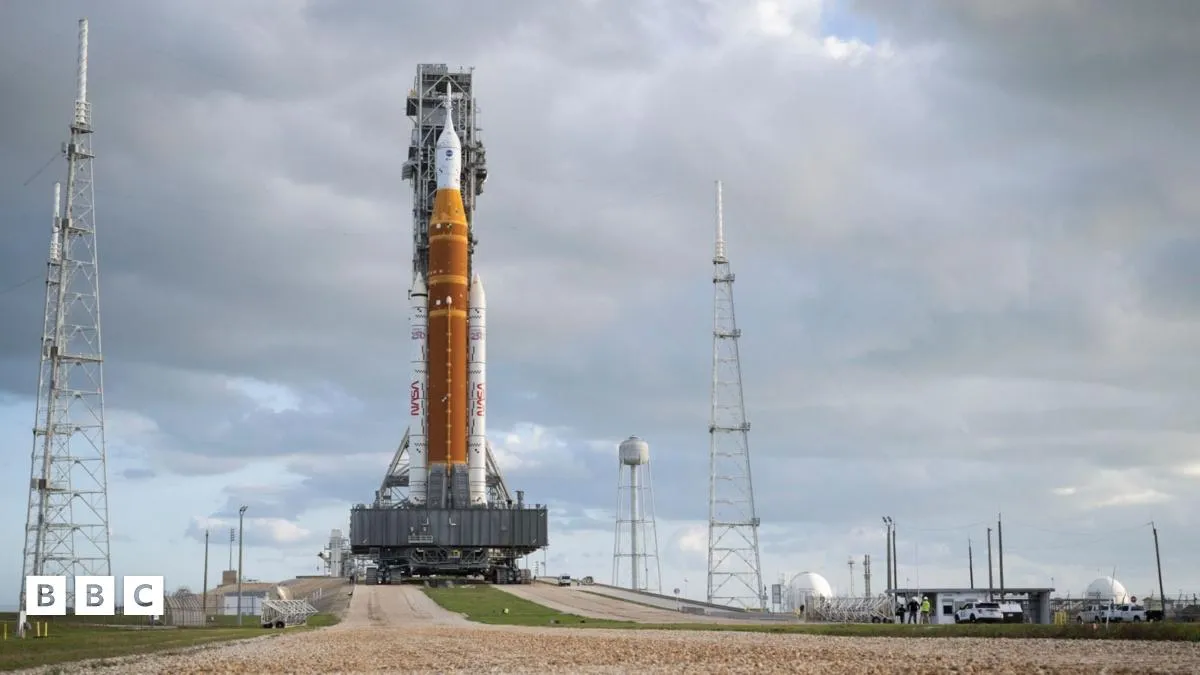
The goal of returning to the lunar surface was announced by President Donald Trump in his first term. NASA’s Artemis II rocket is back at the launch pad for the second time, following its initial journey on January 17. This mission aims to send astronauts on a crewed flyby of the Moon, marking the first such endeavor in over fifty years.
However, the launch has faced delays due to a problem with its helium system. Engineers detected an issue with helium flow and decided to roll the Artemis II stack back into the Vehicle Assembly Building (VAB) to investigate the problem. Fortunately, the helium issue has been resolved, and the Artemis II launch is now expected to take place in early April.
The launch window opens on April 1, 2026, and the mission is set to last approximately ten days. The Artemis II crew will consist of three U.S. astronauts and one Canadian astronaut, all of whom have entered quarantine in Houston as they prepare for liftoff.
The Artemis II stack weighs an impressive 5,000 tonnes and was moved four miles (6.5 kilometers) from the assembly building to launch pad 39B, a process that took a maximum of 12 hours. Engineers will spend several days checking that the repairs carried out in the VAB have worked as intended.
NASA officials are optimistic about the upcoming mission, stating, “The agency is now hopeful that the first crewed flyby in more than half a century will get off the ground in early April.” As the launch date approaches, excitement builds within the space community and among the public, eager to witness this significant step in lunar exploration.
Details remain unconfirmed regarding any further developments, but the preparations are well underway for what promises to be a historic moment in space exploration.