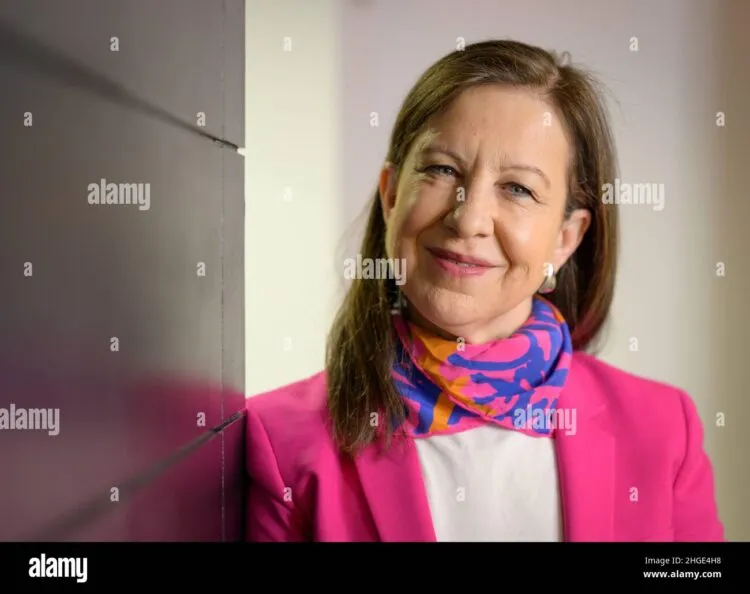
“Iran does not want a ceasefire, it will not negotiate a ceasefire, even though President Trump, according to Israeli media, is now looking for a one month ceasefire,” stated Lyse Doucet, reflecting her deep understanding of geopolitical tensions. This insight comes as Doucet, a prominent journalist and author, finds herself shortlisted for the Women’s Prize for Nonfiction 2026.
The Women’s Prize for Nonfiction, which offers a £30,000 award, was launched in 2024 to address the gender gap in nonfiction publishing. Research revealed that only 35.5% of winners across major UK nonfiction awards over a decade were women, prompting the establishment of this significant prize.
Doucet’s book, titled The Finest Hotel in Kabul, traces Afghanistan’s modern history through the lens of a single hotel, providing a unique perspective on the country’s tumultuous past. The shortlist for this year includes five other notable authors: Arundhati Roy, Judith Mackrell, Jane Rogoyska, Ece Temelkuran, and Daisy Fancourt.
Last year’s winner was Rachel Clarke for her work, The Story of a Heart, while Naomi Klein won the inaugural award with Doppelganger. The 2026 winner will be announced on June 11, a date that many in the literary community are eagerly anticipating.
As the prize aims to uplift women’s voices in nonfiction, it is noteworthy that women’s share in popular science has risen from 11% in 2023 to 22% in 2025. However, men still dominate categories such as business and management, where they account for 93% of published works.
With the announcement date approaching, the literary world is abuzz with speculation about who will take home the prestigious award. Doucet’s contributions to journalism and literature have already made her a respected figure, and her nomination further emphasizes the importance of women’s narratives in nonfiction.
As the competition heats up, Doucet’s insights and experiences continue to resonate, making her a compelling candidate for the prize. The Women’s Prize for Nonfiction not only recognizes outstanding works but also serves as a platform for addressing broader issues of representation in the literary field.
Details remain unconfirmed regarding the final decision, but the anticipation surrounding the event is palpable. The recognition of women in nonfiction writing is crucial for fostering a more inclusive literary landscape.
As we await the announcement, Doucet’s voice and the stories she tells remain vital to understanding complex global issues, reinforcing the significance of her work in today’s world.