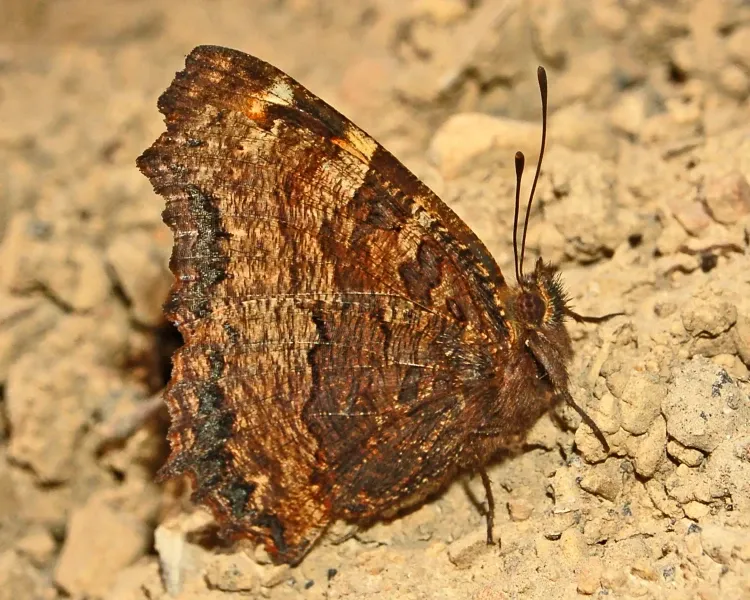
Large Tortoiseshell Butterfly Declared Resident Species in the UK
The large tortoiseshell butterfly is now a resident species in the UK after being declared extinct in the last century. This marks a significant milestone in conservation efforts, as the butterfly has been sighted in woodlands across Kent, Sussex, Hampshire, Dorset, Cornwall, and the Isle of Wight.
This development is particularly noteworthy as it is the first time in Butterfly Conservation’s 58-year history that the large tortoiseshell has been classified as resident rather than migratory. Richard Fox, a representative from Butterfly Conservation, stated, “It is resident and therefore it is another species to add to Britain’s total, which is good news.” With the return of the large tortoiseshell, Britain’s native butterfly count has increased to 60.
The large tortoiseshell butterfly, which last flourished in Britain during the 1940s, is larger than its relative, the small tortoiseshell, and notably lacks the white markings found on the smaller species. Its caterpillars feed on a variety of trees, including elm, willow, aspen, and poplar. The species is believed to have returned due to population rises in the Netherlands and France, alongside climate change, which may have created more favorable conditions for its survival.
Caterpillars of the large tortoiseshell have been found feeding in the wild since 2020, confirming that the butterfly is breeding again in Britain. Fox remarked, “The signs are really positive, which is lovely,” highlighting the encouraging signs of recovery for this species.
The large tortoiseshell hibernates as an adult and emerges in spring to mate and lay eggs. Adult butterflies from this year’s offspring are expected to take flight during midsummer. Butterfly Conservation is actively encouraging the public to log sightings of the large tortoiseshell using the iRecord app, which will aid in tracking its distribution and abundance.
Despite the positive developments, details remain unconfirmed regarding whether the large tortoiseshell will be widespread across multiple landscapes in the UK. Fox acknowledged this uncertainty, stating, “We’re still in that zone of uncertainty at the moment, but there are exciting signs.” As observers continue to monitor the situation, the return of the large tortoiseshell butterfly stands as a testament to the resilience of nature and the effectiveness of conservation efforts.