How it unfolded
On March 29, 2026, the figure skating world turned its attention to Prague, Czech Republic, where the atmosphere was electric as competitors prepared for the world championships. Among them was Ilia Malinin, known as the ‘quad god’ for his remarkable ability to execute quadruple jumps. With the weight of expectations on his shoulders, Malinin was determined to reclaim his title after a challenging performance at the Olympics, where he finished in eighth place.
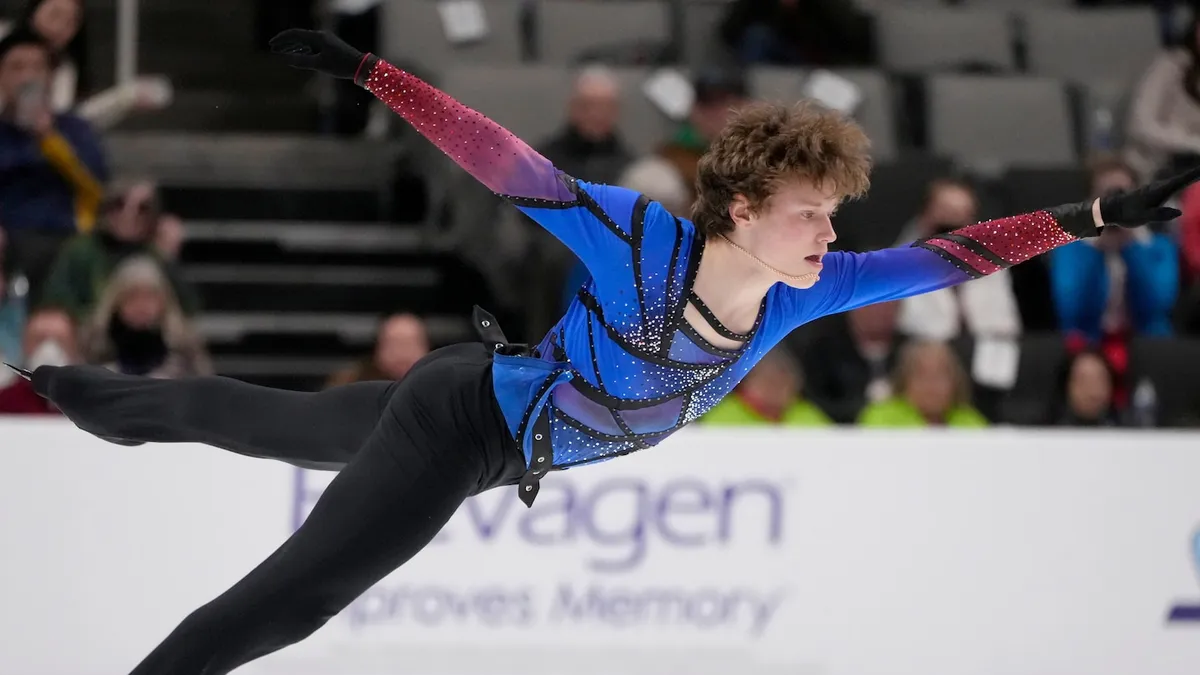
As the competition progressed, Malinin showcased his extraordinary talent during the free skate segment. He landed five quadruple jumps, a feat that not only demonstrated his technical prowess but also captivated the audience and judges alike. His free skate score of 218.11 contributed to a total score of 329.40 points, securing him the championship title for the third consecutive year. This victory marked a significant milestone, as he became the first skater since Nathan Chen to achieve three consecutive men’s world titles.
In a closely contested event, Yuma Kagiyama finished in second place with a total of 306.67 points, while Shun Sato took home the bronze with 288.54 points. Kagiyama expressed his satisfaction with his performance, stating, “I came here solely focused on finishing the event with a satisfying performance.” This sentiment resonated with many competitors, as the pressure to perform at such a high level was palpable.
While Malinin’s performance was nothing short of spectacular, he notably did not attempt the quad axel jump during the championships. This decision raised eyebrows among fans and analysts, but it did not detract from his overall success. Malinin’s ability to adapt and execute his routine flawlessly underscored his status as a top contender in the sport.
The ice dance competition also saw remarkable performances, with Laurence Fournier Beaudry and Guillaume Cizeron winning the title with a total score of 230.81 points. Cizeron expressed the emotional connection they felt during their performance, saying, “It felt amazing. It was a suspended moment with all of you, and it’s such a special feeling to feel all of your eyes and your energy on what we created, so thank you so much.” This highlights the unique bond between skaters and their audience, which is often a driving force behind their performances.
Piper Gilles and Paul Poirier secured silver in ice dance for the third consecutive year, showcasing their consistent excellence in the discipline. Poirier remarked, “We’re really satisfied. I think we’re so happy that we chose to come to this event. We had some wonderful performances.” Their dedication and hard work were evident, contributing to the overall excitement of the championships.
Stephen Gogolev also made headlines by finishing fourth with a personal-best score of 281.04 points, further emphasizing the depth of talent present at this year’s competition. However, the absence of Mikhail Shaidorov, the Olympic champion, left fans wondering how the results might have differed had he participated.
As the dust settles on the world championships, Ilia Malinin’s victory not only cements his legacy in figure skating but also sets the stage for future competitions. His journey from the Olympic stage to reclaiming his title demonstrates resilience and skill, inspiring a new generation of skaters. The significance of this event extends beyond the medals; it represents the culmination of years of hard work, dedication, and passion for the sport.