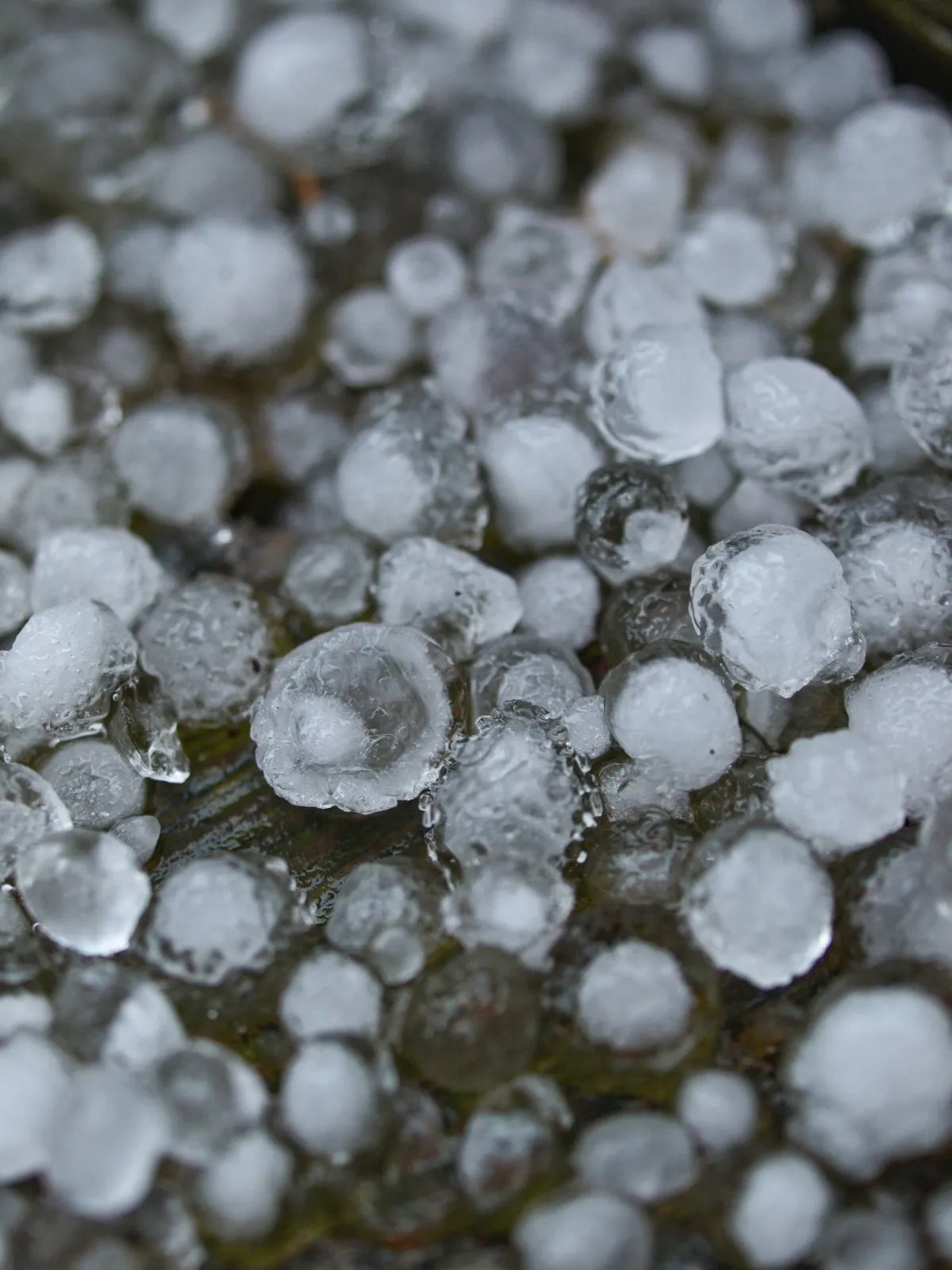
In a recent weather event, hailstones have garnered attention due to their potential for destruction. These solid ice formations, which can occur during thunderstorms, have been reported in various locations, causing damage to property and posing risks to safety.
Hail is a form of precipitation that forms inside the updrafts of thunderstorms. According to the National Severe Storms Laboratory, “Hail is a form of precipitation consisting of solid ice that forms inside thunderstorm updrafts.” The immediate circumstances surrounding hail formation involve raindrops being carried upward into extremely cold areas of the atmosphere, where they freeze together, creating hailstones.
Hail can vary in size, with storms producing hail one inch or greater classified as severe. The largest hailstone recorded in the United States fell near Vivian, South Dakota, on June 23, 2010, measuring an astonishing eight inches in diameter. Such large hailstones can cause extensive damage to aircraft, homes, and vehicles, and can even be deadly to livestock and people. The National Severe Storms Laboratory warns that “Hail can damage aircraft, homes and cars, and can be deadly to livestock and people.”
In addition to the immediate danger posed by hailstones, their formation is influenced by various atmospheric conditions. The conditions experienced by the hailstone can change as it passes horizontally across or near an updraft, leading to variations in size and impact. This unpredictability makes it essential for communities to stay informed about weather patterns, especially in regions known for frequent hail occurrences.
Key moments
One notable area in the United States known for its hail activity is the meeting point of Nebraska, Colorado, and Wyoming, often referred to as “Hail Alley.” This region averages seven to nine hail days per year, highlighting the frequency of such weather events. On June 29, 2024, golf ball-sized hail caused significant damage in Gothenburg and extensive destruction in Cozad, lasting approximately 15 minutes. This event underscores the potential severity of hailstorms and the need for preparedness.
As thunderstorms continue to develop, the weather is expected to remain rainy until Sunday, with further thunderstorms and hailstones anticipated later in the day. Residents in affected areas should remain vigilant and take necessary precautions to protect themselves and their property. The unpredictability of hailstorms necessitates awareness and readiness, especially in regions prone to such weather phenomena.
While the exact details of upcoming storms remain uncertain, the potential for hailstones to form during thunderstorms is a significant concern for meteorologists and communities alike. As the National Severe Storms Laboratory notes, “There is no clear distinction between storms that do and do not produce hailstones,” emphasizing the need for continuous monitoring of weather conditions.