Introduction
Wuthering Heights, the only novel by Emily Brontë, has captivated audiences since its publication in 1847. Its complex characters and haunting narrative have inspired numerous adaptations, particularly in film. Understanding these cinematic interpretations provides insight into how directors and actors have visualised Brontë’s themes of love, revenge, and the supernatural across different eras.
Notable Film Adaptations
The first notable film adaptation of Wuthering Heights was released in 1939, directed by William Wyler. Starring Laurence Olivier and Merle Oberon, this version is considered a classic. The film was praised for its performances and strong visual style, though it deviated significantly from the novel’s plot, focusing primarily on the tumultuous relationship between Heathcliff and Catherine Earnshaw.
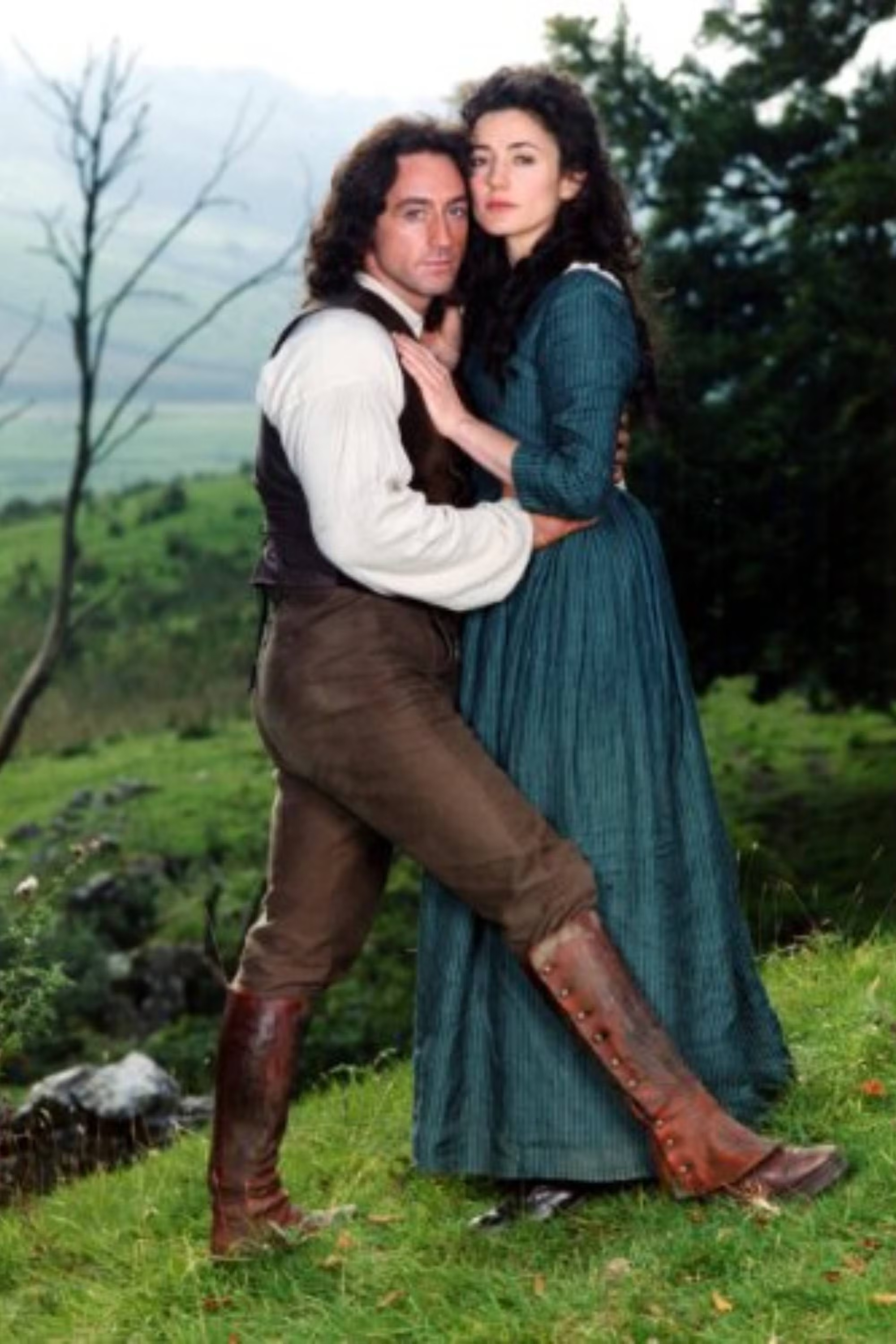
Another significant adaptation was the 1992 version directed by Peter Kosminsky, featuring Ralph Fiennes as Heathcliff and Juliette Binoche as Catherine. This rendition aimed to capture the darkness of the novel more accurately and received mixed reviews for its faithfulness to the source material. Regardless, it brought a new generation to Brontë’s masterpiece.
In 2011, a more contemporary adaptation directed by Andrea Arnold offered a raw, visceral experience of the story. This film was noted for its gritty portrayal and use of natural lighting, which provided an intimate look into the characters’ emotional struggles. While it strayed from the romanticised versions of past adaptations, it effectively highlighted the tragic elements of Heathcliff’s character.
Cultural Impact
Each adaptation of Wuthering Heights not only brings unique artistic interpretations but also reflects the societal attitudes of its time. For example, the 1939 film, created during Hollywood’s Golden Age, presented a version of romance that appealed to contemporary audiences. In contrast, the 2011 adaptation’s focus on realism and emotional authenticity speaks to a modern audience’s desire for raw, relatable storytelling.
Conclusion
The ongoing interest in Wuthering Heights film adaptations underscores the novel’s timelessness and relevance. Each version allows viewers to explore different facets of Heathcliff and Catherine’s tumultuous relationship, revealing new layers of meaning. As filmmakers continue to revisit this classic narrative, audiences can expect to see further explorations of its themes, ensuring that Brontë’s work remains a significant part of film and literary discussions. The future of Wuthering Heights adaptations seems promising, with the potential for new, innovative interpretations that resonate with modern viewers.