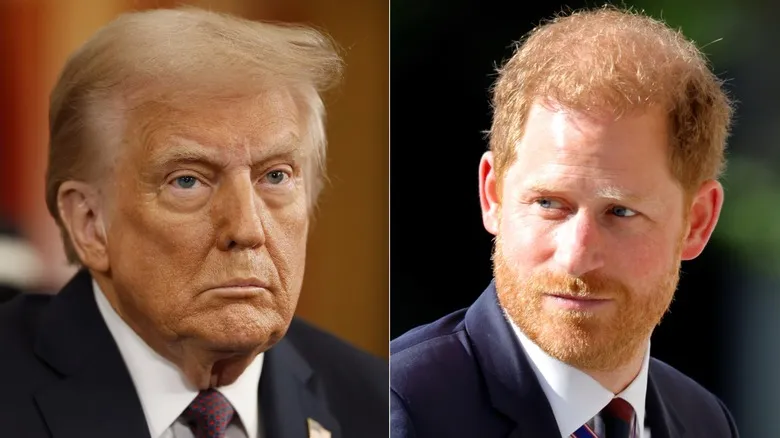
Donald Trump publicly dismissed Prince Harry’s comments on Ukraine, asserting he represents the UK more than the Duke of Sussex. This statement comes after Prince Harry urged American leadership to honor its international treaty obligations regarding the ongoing conflict in Ukraine.
At the Kyiv Security Forum, Harry delivered an impassioned speech that emphasized the importance of US involvement in supporting Ukraine. He stated, “This is a moment for American leadership, a moment for America, to show that it can honour its international treaty obligations.” His remarks reflect a growing concern about the role of Western nations in the Ukraine conflict.
Trump’s response was pointed. He claimed, “I think I am speaking for the UK more than Prince Harry … but I appreciate his advice very much.” This assertion not only undermines Harry’s position but also raises questions about how public figures influence international perceptions and policies.
Harry’s visit to Ukraine marks his third since the war began in 2022, showcasing his commitment to humanitarian efforts in the region. That context matters because it highlights a stark contrast between royal advocacy and political rhetoric.
Moreover, as tensions rise, the King and Queen of the UK are scheduled to visit the US for a four-day trip. Trump mentioned that this visit could “absolutely” help repair relations with the UK. The timing is crucial; it suggests a need for diplomatic engagement amid conflicting viewpoints.
The dynamics between Trump and Prince Harry also underscore broader issues in US-UK relations. While both figures hold significant public influence, their approaches to global issues differ markedly—one rooted in traditional diplomacy and the other in celebrity advocacy.
As these narratives unfold, uncertainties linger. How will this exchange affect public opinion on both sides of the Atlantic? Will it change how leaders engage with international conflicts?
For now, one thing is clear: this public spat reflects deeper ideological divides regarding foreign policy and humanitarian responsibilities. The world watches as these two influential figures continue to shape discourse around critical global issues.