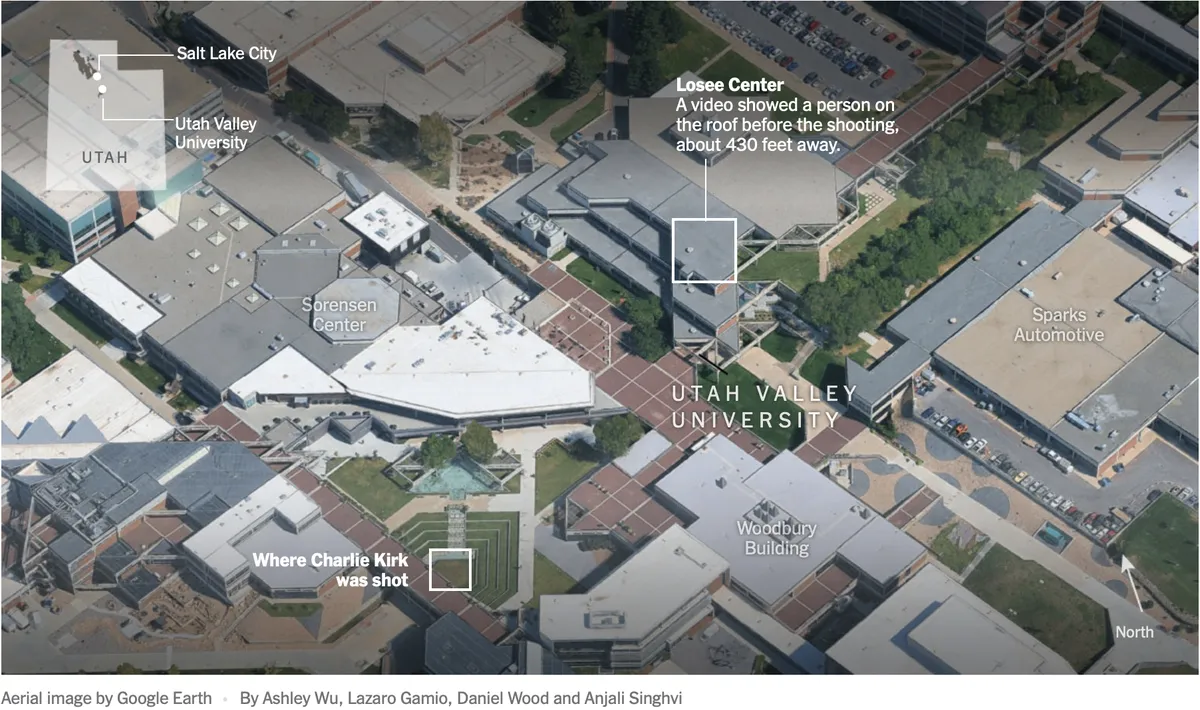
Tragic Assassination of Charlie Kirk
“Last year, Charlie was violently murdered by an assassin and martyred for his beliefs,” stated former President Donald Trump during a memorial service for Charlie Kirk, who was tragically assassinated at Utah Valley University on September 10, 2025. The shocking event has sent ripples through the political landscape, particularly among right-wing circles, where Kirk was a prominent figure.
At the time of his death, Kirk was just 31 years old and was known as the founder of Turning Point USA, an organization aimed at promoting conservative values on college campuses. His assassination came as a surprise to many, particularly given his vocal stance against what he described as ideological discrimination in higher education. Kirk argued that colleges were indoctrinating students with Marxist thought, a claim that resonated with many of his supporters.
The alleged assassin, Tyler James Robinson, has been charged with aggravated murder. Details surrounding the incident remain unconfirmed, but it has sparked a national conversation about the safety of public figures and the increasingly polarized political climate in the United States.
Following Kirk’s death, his wife, Erika Kirk, took over as CEO of Turning Point USA. She expressed her grief, stating, “My husband’s dead. Like, I’m not trying to be morbid, but he’s dead. And it puts life into perspective.” Her words underscore the profound impact of Kirk’s loss not only on his family but also on the broader conservative movement.
In the wake of his assassination, notable figures have continued to speak out about Kirk’s legacy. Carlos and Alexa PenaVega, who lost their own child in 2024, remarked, “I think what’s been amazing is that Taven, and then even our Indy, and then even recently, Charlie Kirk. Like these guys, their lives have been so much more impactful after.” This sentiment reflects a growing recognition of Kirk’s influence, particularly among younger conservatives.
Moreover, discussions surrounding Kirk’s legacy have led to legislative proposals, such as a bill in Tennessee that aims to establish a “Charlie Kirk plaza” on state university campuses. Additionally, the proposed “Charlie Kirk Act” seeks to empower far-right students to sue universities for what they perceive as ideological discrimination. These initiatives highlight the ongoing relevance of Kirk’s views and the impact of his untimely death on the political discourse.
Despite the controversies surrounding his views, which have been characterized as openly bigoted and far-right, Kirk’s assassination has galvanized his supporters. The attendance at AmericaFest, a major event for Turning Point USA, surged to 275,000 after his death, indicating a rallying of the base in response to the tragedy. Protests against Turning Point USA chapters in Michigan high schools have also emerged, showcasing the polarized reactions to Kirk’s legacy.
As the political landscape continues to evolve, the memory of Charlie Kirk remains a focal point for discussions about free speech, ideological discrimination, and the future of conservative activism in America. The impact of his life and death will likely resonate for years to come, shaping the narratives around right-wing politics and activism.