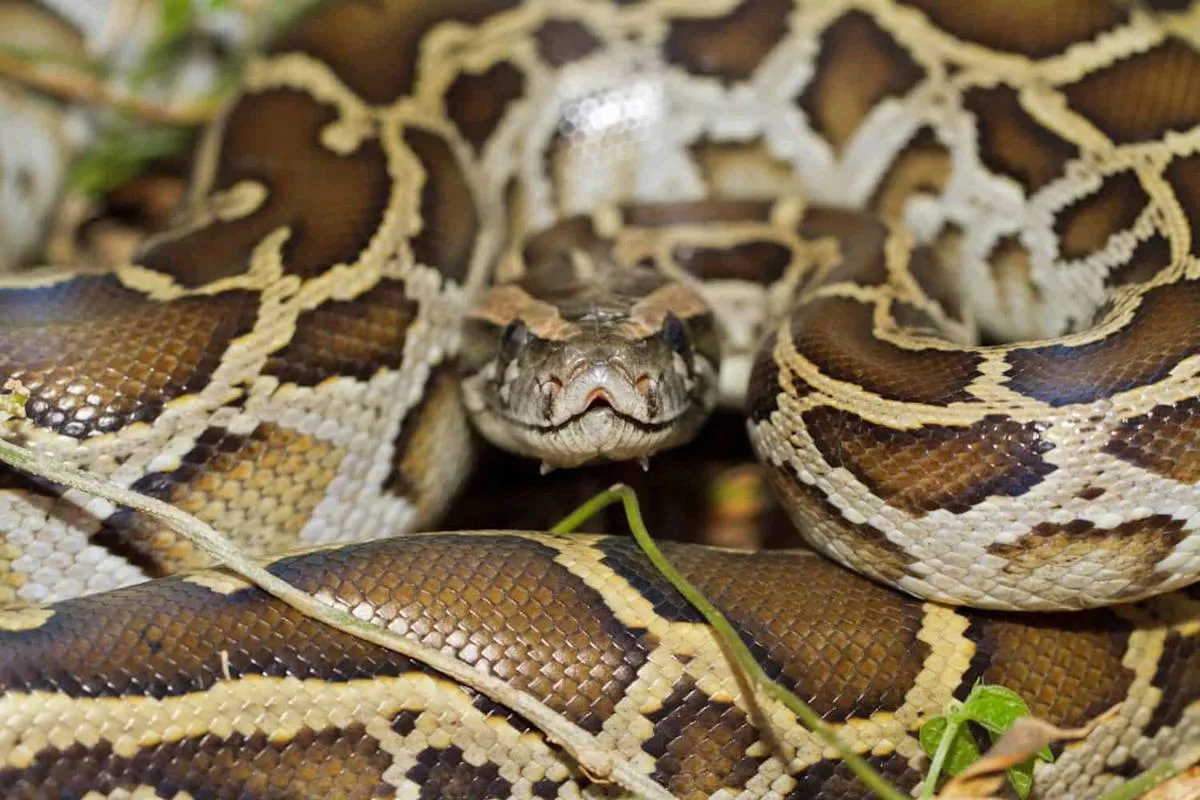
In a troubling development for Florida’s ecosystems, Burmese pythons have been identified as a major invasive species in the Florida Everglades, with their population continuing to grow since their introduction from Southeast Asia. These snakes can reach lengths of up to 18 feet and weigh more than 200 pounds, making them formidable predators.
The immediate impact of Burmese pythons on local wildlife has been catastrophic. Studies indicate that they have decimated the meso-mammal population by over 90 percent. Notably, raccoon populations have plummeted by 99.3 percent, while opossums and bobcats have seen reductions of 98.9 percent and 87.5 percent, respectively. Other species, such as marsh rabbits and cottontail rabbits, are now considered extirpated from areas heavily invaded by these pythons.
Since their introduction, the Burmese python population has exploded, particularly after Hurricane Andrew in 1992, which likely facilitated their spread. In 2025 alone, the Python Action Team removed 1,022 pythons from the Everglades in an effort to control their numbers.
Burmese pythons kill their prey through constriction, effectively stopping blood flow to vital organs. This predatory behavior has led to alarming instances, such as a python observed swallowing a 77-pound white-tailed deer, which weighed 66.9 percent of the snake’s mass at the time of consumption.
The ecological consequences of this invasive species extend beyond immediate predation. The drastic decline in native species poses a significant threat to the balance of the Everglades ecosystem, impacting not only the food chain but also the overall health of the environment.
Officials and conservationists continue to express concern over the Burmese python’s impact on Florida’s wildlife. As the situation evolves, efforts to manage and control the python population remain critical. Details remain unconfirmed regarding the long-term effectiveness of these management strategies.