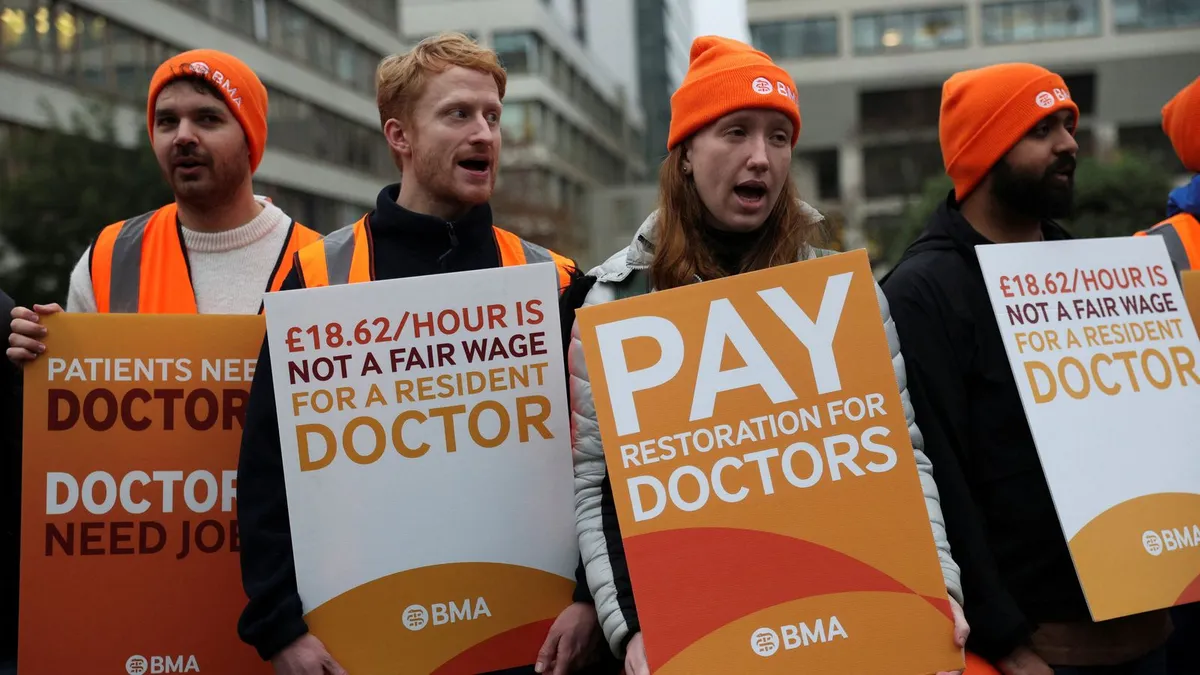
As tensions rise in the healthcare sector, the British Medical Association (BMA) has announced a strike by resident doctors in England, set to commence at 7am on April 7, 2026, and continue until 6:59am on April 13, 2026. This decision follows a series of unsuccessful negotiations with the government regarding pay and job security.
Just before the strike, the BMA dismissed the latest government pay offer as “insufficient,” highlighting the ongoing disputes that have plagued discussions for weeks. The government proposed a pay increase spread over three years, while the pay review body (DDRB) recommended a 3.5% uplift. However, these offers have not met the expectations of resident doctors.
Dr. Jack Fletcher, a representative of the BMA, emphasized the dire situation, stating, “Resident doctors have been left with no choice but to strike.” He pointed out that economic indicators, influenced by global events, suggest a future of significantly increased inflation, making the current pay proposals untenable.
The BMA’s aim remains clear: they seek pay restoration for resident doctors, and any deal that does not substantially move towards this goal is unlikely to be accepted. Dr. Fletcher reiterated, “We have made abundantly clear throughout this dispute that our aim is pay restoration, and any deal that did not move us substantially in that direction was not going to fly.”
As the strike approaches, the BMA has called for six days of industrial action, which will begin just after the Easter bank holiday. This timing adds urgency to the situation, as the healthcare system braces for potential disruptions.
Despite the looming strike, the BMA has expressed a willingness to negotiate further to prevent the industrial action. Dr. Fletcher remarked, “No strikes need to happen, but Government will need to act fast to prevent them.” This statement underscores the critical nature of the negotiations and the importance of addressing the concerns of resident doctors.
The ongoing dispute over pay and jobs has led to multiple rounds of negotiations, with many doctors considering leaving the UK for better opportunities abroad due to the current pay issues. The situation remains fluid, and details remain unconfirmed as the strike date approaches.
As it stands, the BMA’s position reflects a broader concern about the sustainability of the healthcare workforce in England, highlighting the need for urgent action from the government to address these pressing issues.