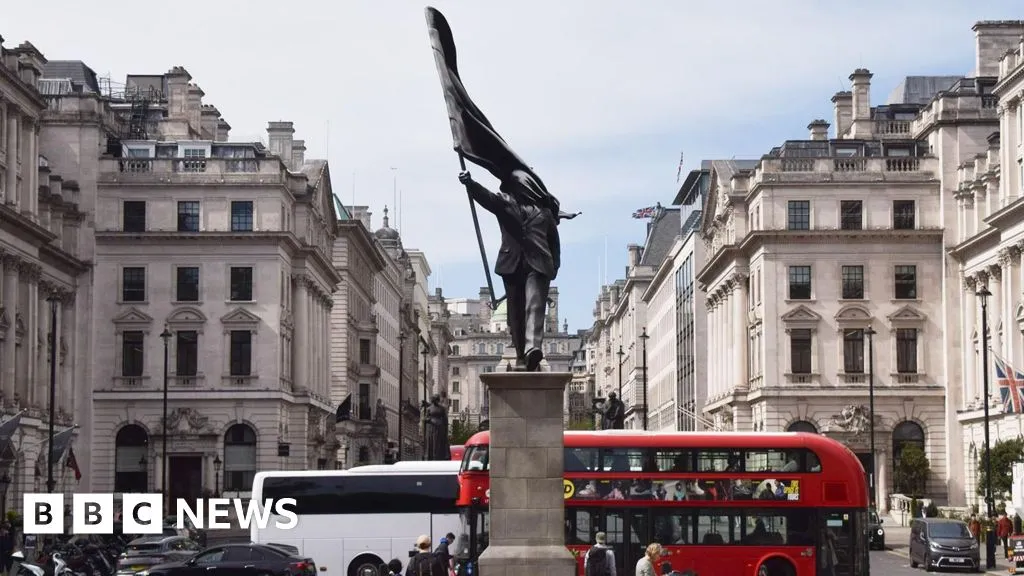
A new statue by Banksy has appeared on Waterloo Place in central London, confirmed by the artist himself through his Instagram account. The statue, depicting a suited man with a large flag covering his face, was first reported on April 29, 2026.
This latest work adds to Banksy’s growing presence in London over the past two years. It reflects the bronze and granite monuments nearby, including the iconic Duke of York Column and tributes to Florence Nightingale. But what does this statue signify?
Observers have begun to analyze the implications of the figure being blinded by its own flag. One commentator noted, “As a long-time Banksy collector, this one really hits. Big monument energy, but the idea is brutally simple: a suited figure blinded by its own flag. Classic Banksy. Quiet at first, then impossible to unsee.” This interpretation aligns with Banksy’s history of critiquing societal norms through street art.
The context surrounding this new piece is essential. In summer 2024, Banksy created a series of stenciled animal silhouettes across various locations in London. Following that, he made headlines again with an unauthorized mural at the Royal Courts of Justice in September 2025. Each piece speaks to his commentary on authority and societal structures.
That context matters because it shows how Banksy continues to provoke thought and discussion around themes like power and identity. His works often appear unexpectedly, prompting immediate public reaction—much like his latest statue.
As discussions unfold regarding the meaning of this new installation, it remains clear that Banksy’s influence on street art is as potent as ever. With over 13.8 million Instagram followers, he commands attention whenever he reveals new works.
In the coming days, we can expect more reactions from art critics and city officials alike. Will they embrace this provocative addition to London’s landscape or seek to distance themselves from its controversial implications? Only time will reveal how this statue integrates into the broader narrative of urban art and public space.