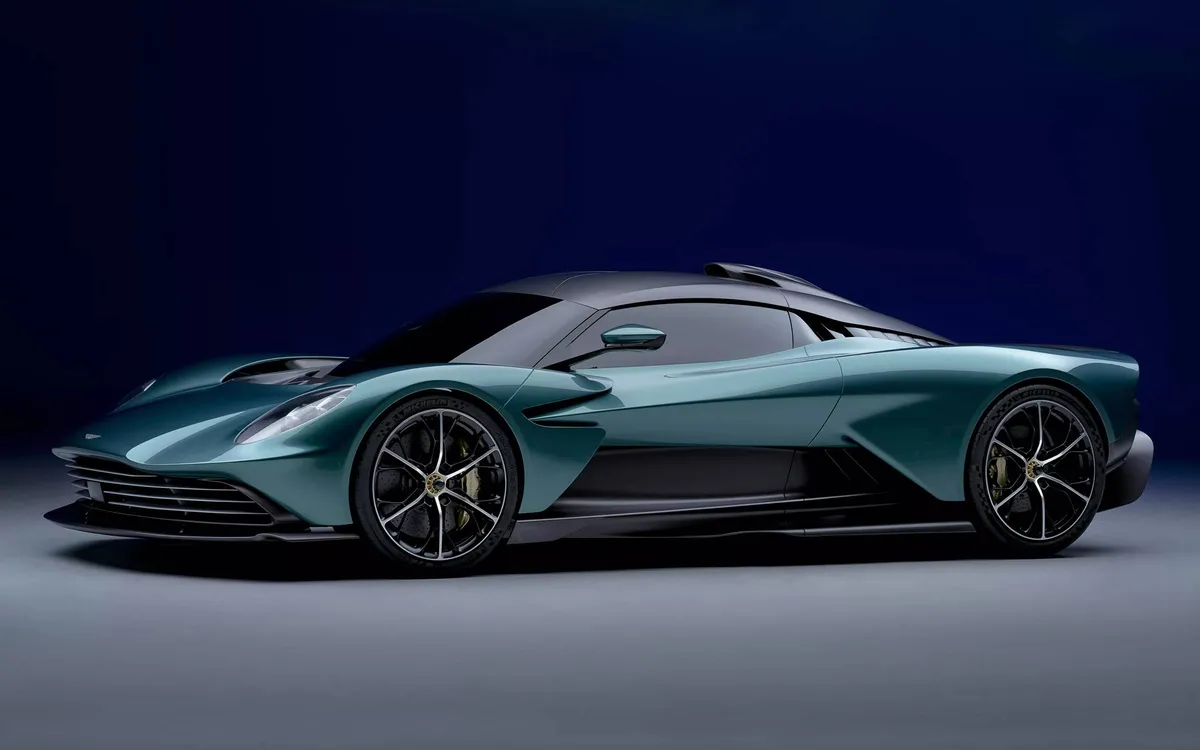
When Jeremy Clarkson was spotted getting into an Aston Martin Valhalla in London, it sparked interest in the world of high-performance cars. What does this mean for the hybrid hypercar market?
The Aston Martin Valhalla is not just another supercar; it produces an impressive 1,064 horsepower thanks to its innovative plug-in hybrid setup. This setup includes a 4.0-litre twin-turbocharged V8 engine sourced from Mercedes-AMG, paired with two electric motors. The result? A staggering acceleration from 0 to 62 mph in approximately 2.5 seconds.
That context matters because Clarkson, known for his work on BBC’s Top Gear and Amazon’s The Grand Tour, has a long history of testing high-performance vehicles. His endorsement—whether intentional or not—could influence public perception and desirability of the Valhalla.
In addition to its blistering speed, the Valhalla boasts a top speed exceeding 200 mph. However, with a price tag ranging from £850,000 to £1,000,000, it remains a luxury item accessible only to a select few.
The mid-engined AWD configuration and advanced technology make it stand out among other supercars. As automotive enthusiasts eagerly await more details about its performance and availability, only a limited number of these hypercars are expected to be built.
This sighting has generated buzz on social media platforms, where users have highlighted both the rarity of the Valhalla and Clarkson’s longstanding association with Aston Martin road tests on television. His presence alone brings significant attention to this remarkable vehicle.
What remains unclear is how many units will actually make it to consumers and how they will perform in real-world conditions compared to their competitors.