What the data shows
The upcoming Artemis II launch raises a pivotal question: What does this mission signify for the future of human space exploration? The answer is profound, as it marks NASA’s first crewed mission to the Moon in over half a century, scheduled for January 17, 2026.
Artemis II will send four astronauts—Reid Wiseman, Victor Glover, Christina Koch, and Jeremy Hansen—on a journey that will circle the Moon for the first time since the Apollo missions. This mission is not just a nostalgic return; it is a critical step in NASA’s broader goal of establishing a sustainable human presence on the Moon and eventually paving the way for human exploration of Mars.
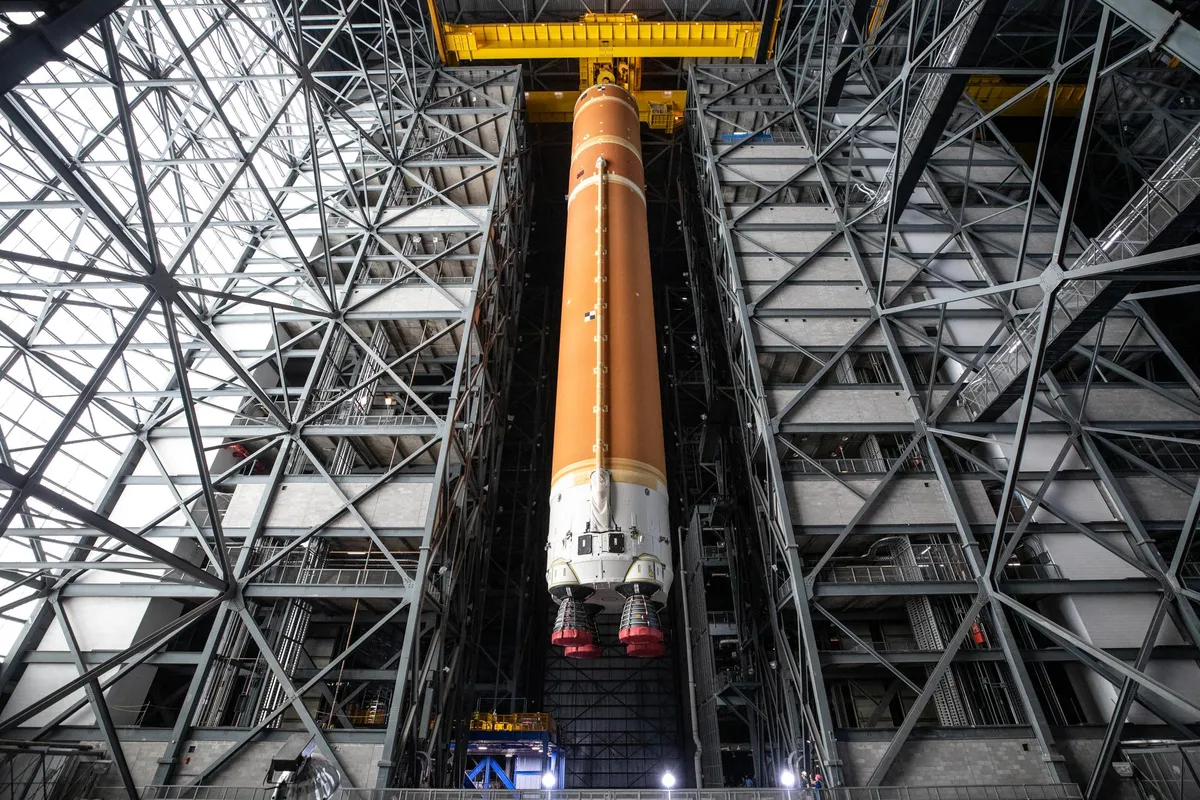
The mission will utilize the Space Launch System (SLS) rocket and the Orion spacecraft, which are designed to support deep space exploration. Over a span of 10 days, the crew will orbit the Moon, testing systems that are crucial for future lunar landings and beyond. The launch countdown will commence approximately two days prior to liftoff, involving a series of meticulous preparations and checks to ensure the mission’s success.
NASA has not sent astronauts to the Moon since the 1970s, making this mission a historic milestone. According to Scott Pace, a prominent figure in the space community, “We’re about to send humans in orbit around the Moon again.” This sentiment underscores the excitement and significance surrounding the Artemis II mission.
The countdown process includes both ‘L Minus’ and ‘T Minus’ times, which are critical for tracking the launch sequence. The launch team will conduct extensive checks to ensure that all systems are functioning optimally. The performance of the solid rocket boosters during launch is particularly crucial, as highlighted by Pace, who noted, “The first thing is the performance of the solid rocket boosters on launch.”
As humanity prepares for this monumental event, it is essential to recognize the implications of the Artemis II mission. It represents not only a return to lunar exploration but also a stepping stone towards future endeavors on Mars. The mission aims to test various systems that will be vital for returning astronauts to the Moon and ultimately for human exploration of the Red Planet.
While the excitement builds, details remain unconfirmed regarding specific mission parameters and potential challenges that may arise. Nevertheless, the Artemis II launch is set to reignite interest in space exploration and inspire future generations of scientists, engineers, and explorers.