The numbers
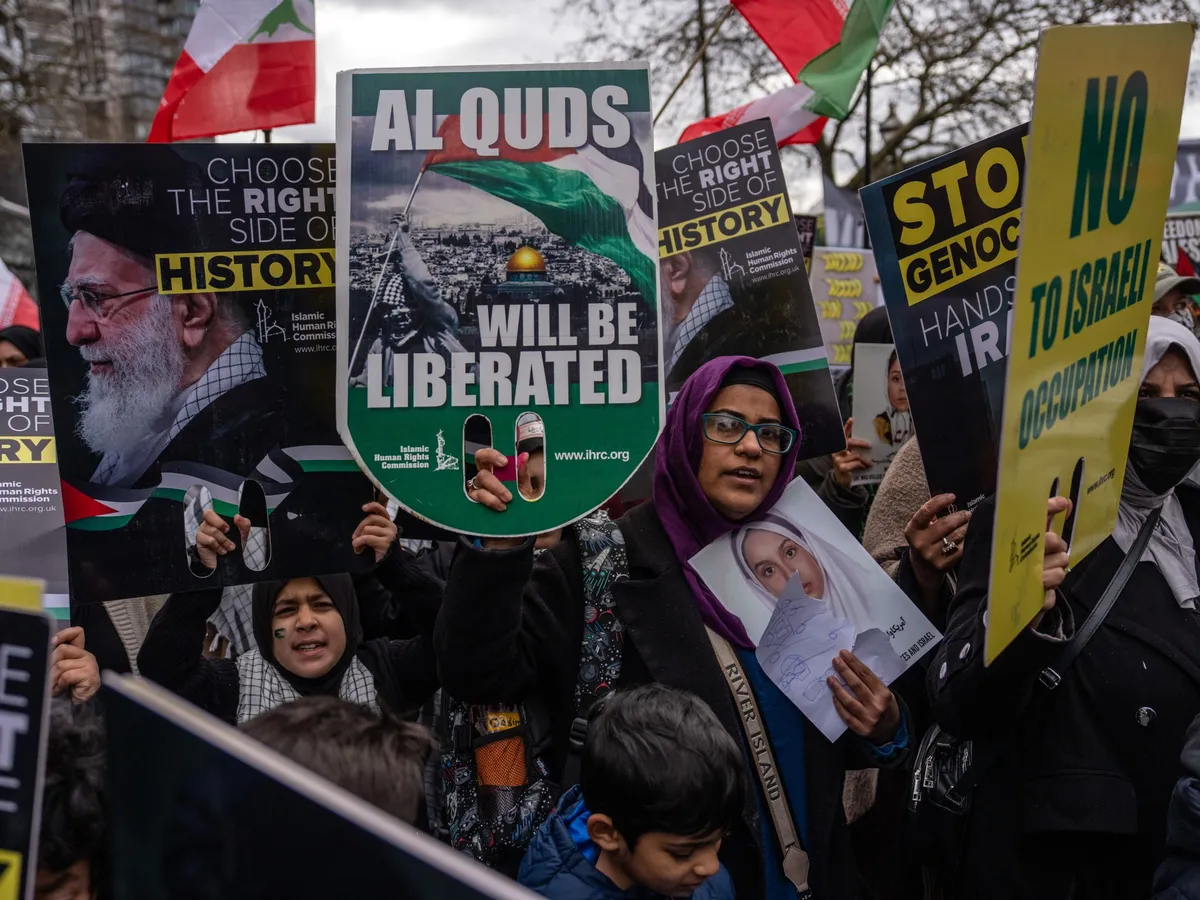
Hundreds gathered in central London on March 15, 2026, for the annual Al-Quds Day demonstration, a significant event that has drawn attention for its political implications and the ongoing Israeli-Palestinian conflict. Despite earlier estimates suggesting that up to 12,000 individuals might participate, the actual turnout was notably lower, likely influenced by the police presence and restrictions imposed on the march.
More than 1,000 police officers were deployed across the area to manage the event, which marked the first time in over a decade that authorities banned the traditional march through the capital. Home Secretary Shabana Mahmood approved a month-long prohibition on marches, leading to a confined demonstration area between Vauxhall and Lambeth bridges. Police made 12 arrests during the event, with charges including support for a proscribed organization and threatening behavior.
Chants such as “from the river to the sea” and “Israel is a terror state” echoed through the streets, reflecting the sentiments of many participants who gathered to express solidarity with Palestinians. However, police warned demonstrators that they would arrest anyone displaying placards or flags that could be deemed as crossing the line into hate crime or supporting a proscribed organization. This warning was echoed by Ade Adelekan, a Metropolitan police assistant commissioner, who indicated that the police were investigating specific chants made by a speaker at the protest.
The Al-Quds Day protest, which translates to “Jerusalem Day” in Arabic, was established by Ayatollah Ruhollah Khomeini after Iran’s 1979 revolution as a demonstration of support for Palestinian rights. Over the past 40 years, it has become an annual event in various cities worldwide, often drawing both supporters and counterprotesters. This year’s event, however, was marked by heightened tensions and a significant police presence, which some observers believe may have deterred participation.
Fereydun Bahrami, a participant in the protest, defended the event’s intentions, stating, “This is a love walk, how can it be a hate march?” His remarks highlight the complex motivations behind the gathering, as many attendees seek to advocate for Palestinian rights rather than promote hatred. Conversely, Home Secretary Mahmood emphasized the need for law enforcement to apply the full force of the law against those spreading hatred, indicating a clear stance on maintaining public order during such demonstrations.
Both sets of demonstrators, including those who gathered in opposition to the Al-Quds protest, dispersed as planned from 3 PM. The police’s strategy appeared effective, as there were no reported attempts from either side to breach the conditions set for the event. However, the restrictions and conditions imposed led many potential attendees to choose to stay away from the protest or counterprotest, raising questions about the future of such demonstrations in London.
As the situation evolves, observers will be watching closely to see how authorities handle similar events in the future and whether the restrictions will continue to shape the nature of protests in the capital. Details remain unconfirmed regarding the long-term implications of this year’s Al-Quds Day protest and the response from both the public and law enforcement.