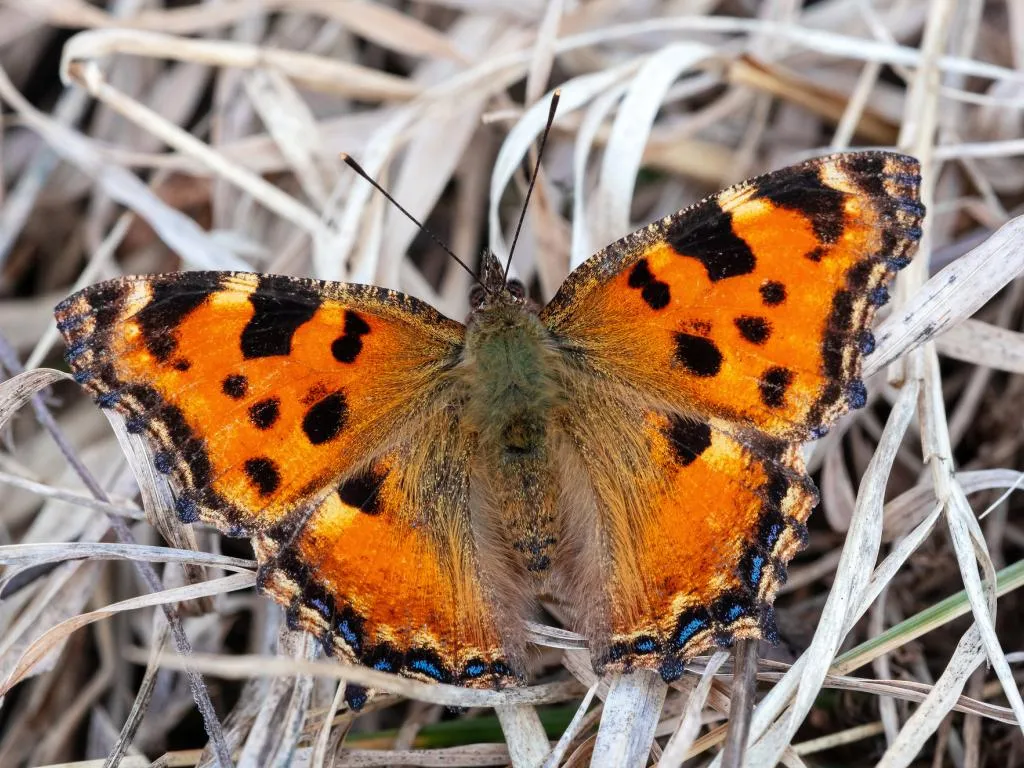
A Remarkable Comeback
“The signs are really positive, which is lovely. It is resident and therefore it is another species to add to Britain’s total,” said Professor Richard Fox, a leading expert on butterflies. His statement highlights a significant ecological milestone: the large tortoiseshell butterfly, previously believed to be extinct in Britain for over 30 years, is now confirmed to be breeding again.
The large tortoiseshell butterfly, once widespread across the UK, was last recorded in the 1980s. Its disappearance was largely attributed to factors such as Dutch elm disease, which decimated the trees on which the butterfly lays its eggs. Recent reports indicate that this species has been sighted in various locations including Kent, Sussex, Hampshire, Dorset, Cornwall, and the Isle of Wight, marking a remarkable resurgence.
Since 2020, caterpillars of the large tortoiseshell have been discovered feeding on trees in the wild, providing strong evidence of breeding activity. This butterfly has now been confirmed as Britain’s 60th resident butterfly species, a testament to the ongoing efforts of conservationists and the natural resilience of wildlife.
Professor Fox further emphasized the importance of these sightings, stating, “If the individuals that are being seen can survive and reproduce then there’s no downside to the Large Tortoiseshell coming back.” This optimism reflects a broader trend in biodiversity recovery, where species once thought lost are beginning to re-establish themselves in their historical ranges.
Experts believe that climate change and increasing populations of the butterfly in Europe may be contributing factors to its return. The large tortoiseshell butterfly’s ability to adapt to changing environmental conditions could play a crucial role in its survival and expansion within Britain.
However, the precise reasons for the large tortoiseshell’s initial disappearance remain unclear. Details remain unconfirmed, leaving some questions about the future stability of this species in the UK. Nevertheless, the current trajectory suggests a positive outlook for the butterfly’s continued presence.
As conservation efforts continue, the large tortoiseshell butterfly serves as a symbol of hope for biodiversity in Britain. Professor Fox concluded, “I would imagine that, if things carry on with this trajectory, then when we compile our next GB Red List we may not classify the Large Tortoiseshell as regionally extinct.” This potential shift underscores the importance of ongoing conservation work and the need to protect the habitats that support such vulnerable species.