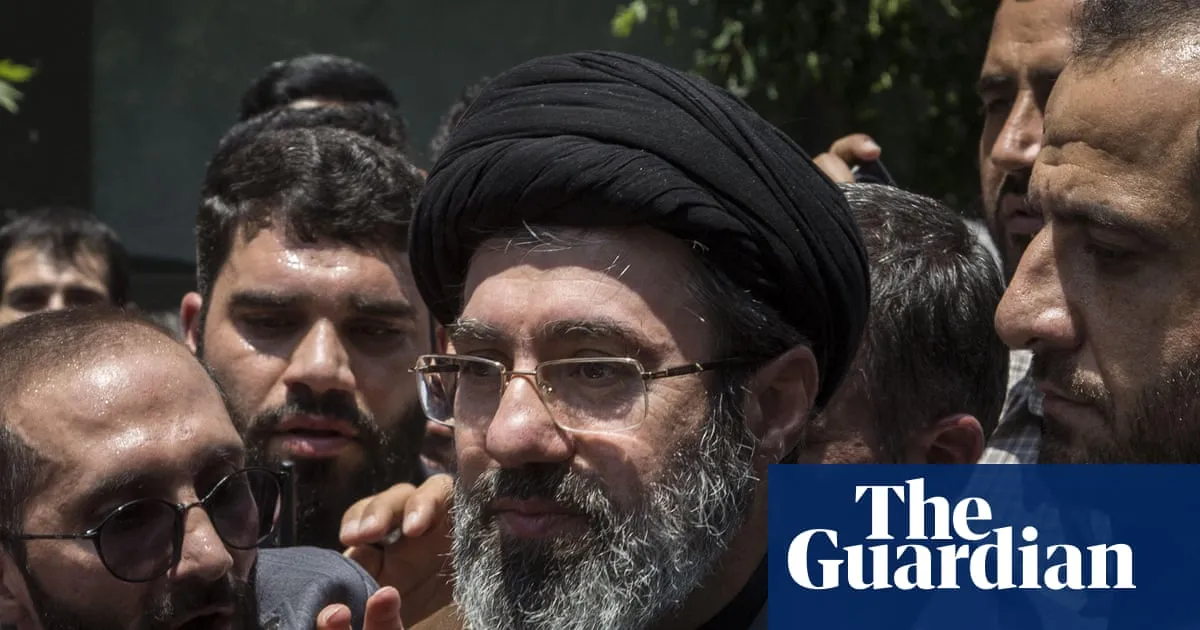
Mojtaba Khamenei Appointed as Supreme Leader of Iran
The recent appointment of Mojtaba Khamenei as the Supreme Leader of Iran raises significant questions about the future direction of the country. How will this transition affect Iran’s domestic and foreign policies? Mojtaba Khamenei, the second son of the late Ayatollah Ali Khamenei, has been chosen to succeed his father following his assassination on February 28, 2026, in a US-Israeli strike.
This event marks a historic moment, as it is the first time since the 1979 Islamic Revolution that Iran’s supreme leadership has passed from father to son. Mojtaba Khamenei has spent much of his life at the center of power in Iran, although he has largely remained out of the public eye. Despite his close ties to conservative clerics and the Islamic Revolutionary Guard Corps, he has never held elected office or formally occupied a senior position within Iran’s government.
The announcement of Mojtaba Khamenei’s succession came on the ninth day of an ongoing war, indicating a tumultuous backdrop for his leadership. The 88-member Assembly of Experts, responsible for selecting Iran’s supreme leader, has now placed its trust in him. Observers note that he is expected to adopt confrontational positions similar to those of his father, which could lead to continued hardline policies in Iran.
Former U.S. President Donald Trump has commented on the situation, stating that Iran’s next leader would not last long without his approval. This statement underscores the international implications of Mojtaba Khamenei’s rise to power. Trump remarked, “Iran’s next supreme leader was ‘not going to last long’ if Tehran did not get his approval first,” highlighting the precarious nature of Iran’s geopolitical standing.
As tensions escalate, Iran has threatened to attack oil facilities in neighboring countries, which could have significant ramifications for global oil prices. Reports indicate that oil prices have already reached $200 per barrel amid the conflict. In a related incident, two people were killed and twelve injured in an attack in Al-Kharj, further illustrating the instability in the region.
Mojtaba Khamenei’s appointment may indicate a continuation of the hardline policies that have characterized his father’s rule, which lasted for 37 years. His leadership style and decisions will be closely monitored both domestically and internationally, as they will likely shape Iran’s future trajectory.
Details remain unconfirmed regarding the full implications of this leadership change, but the Iranian populace is already reacting to the potential for continued conflict and the challenges that lie ahead. As the situation develops, the world watches closely to see how Mojtaba Khamenei will navigate the complexities of Iranian politics and international relations.