Background on Iran’s Leadership and Military Strategy
The Iranian interim leadership council was appointed following the assassination of Supreme Leader Ayatollah Ali Khamenei. This leadership transition has led to a re-evaluation of Iran’s military strategy, particularly in light of ongoing hostilities with the United States and Israel. The recent escalation of military actions has resulted in significant casualties and geopolitical tensions in the region.
Recent Statements by Masoud Pezeshkian
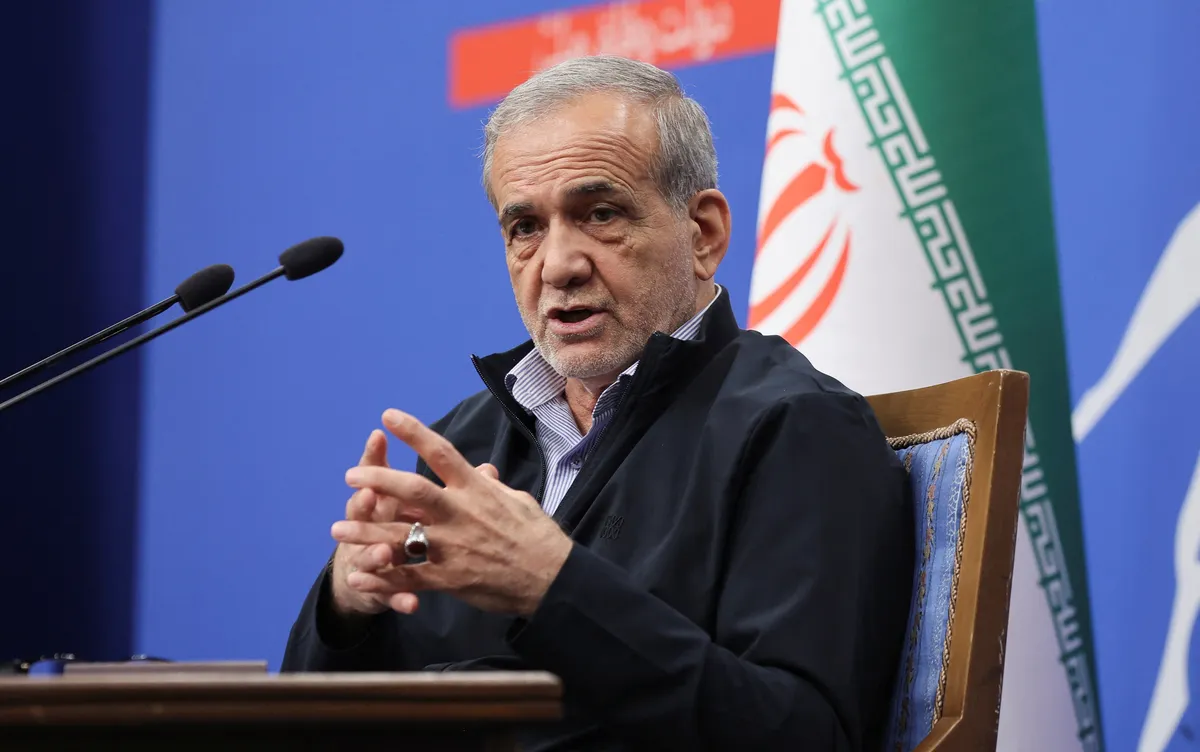
On March 7, 2026, Masoud Pezeshkian, a prominent figure in the Iranian interim government, addressed the nation through a prerecorded message. In his statements, he emphasized that Iran will no longer target neighboring countries unless provoked by attacks originating from those nations. This directive appears to be a strategic shift aimed at reducing tensions with Iran’s neighbors, particularly in the context of ongoing military strikes by the US and Israel.
Apologies and Calls for Unity
Pezeshkian also extended apologies to neighboring countries for recent military strikes that have escalated regional tensions. He called for unity and solidarity among the Iranian people, urging them to stand together in the face of external threats. His remarks come as Iran’s armed forces have been instructed to refrain from initiating attacks unless directly attacked themselves, a policy shift approved by the interim leadership council.
Context of Ongoing Conflicts
The backdrop of Pezeshkian’s statements includes a series of airstrikes conducted by the US and Israel, which have reportedly resulted in the deaths of over 1,200 Iranians within the first week of the conflict. These attacks have not only caused significant loss of life but have also disrupted flights and oil production in the Gulf region. The Iranian Revolutionary Guard Corps (IRGC) is currently overseeing military decisions, a fact that underscores the seriousness of the situation.
International Reactions and Future Implications
Internationally, the situation remains tense. The US President has demanded “unconditional surrender” from Iran, a statement that has been met with resistance from Iranian officials. Pezeshkian’s assertion that “We surrender unconditionally is a dream that they must take with themselves to the grave” reflects the defiant stance of the Iranian leadership amidst these demands.
Immediate Developments
Shortly after Pezeshkian’s message, Qatar successfully thwarted a missile attack, highlighting the ongoing threats in the region. Observers note that if the conflict persists, it could have far-reaching implications for global GDP growth, as indicated by Saad al-Kaabi, who warned that prolonged warfare would disrupt economic stability worldwide.
Conclusion and Future Outlook
As the IRGC continues to play a pivotal role in military decisions, the future of Iran’s military engagement remains uncertain. Resul Serdar, a military analyst, stated, “The IRGC is now in charge fully, and they will decide whether to attack or not.” The coming weeks will be critical in determining the trajectory of Iran’s military strategy and its relations with neighboring countries and global powers. Details remain unconfirmed regarding the exact nature of future military engagements and diplomatic efforts.