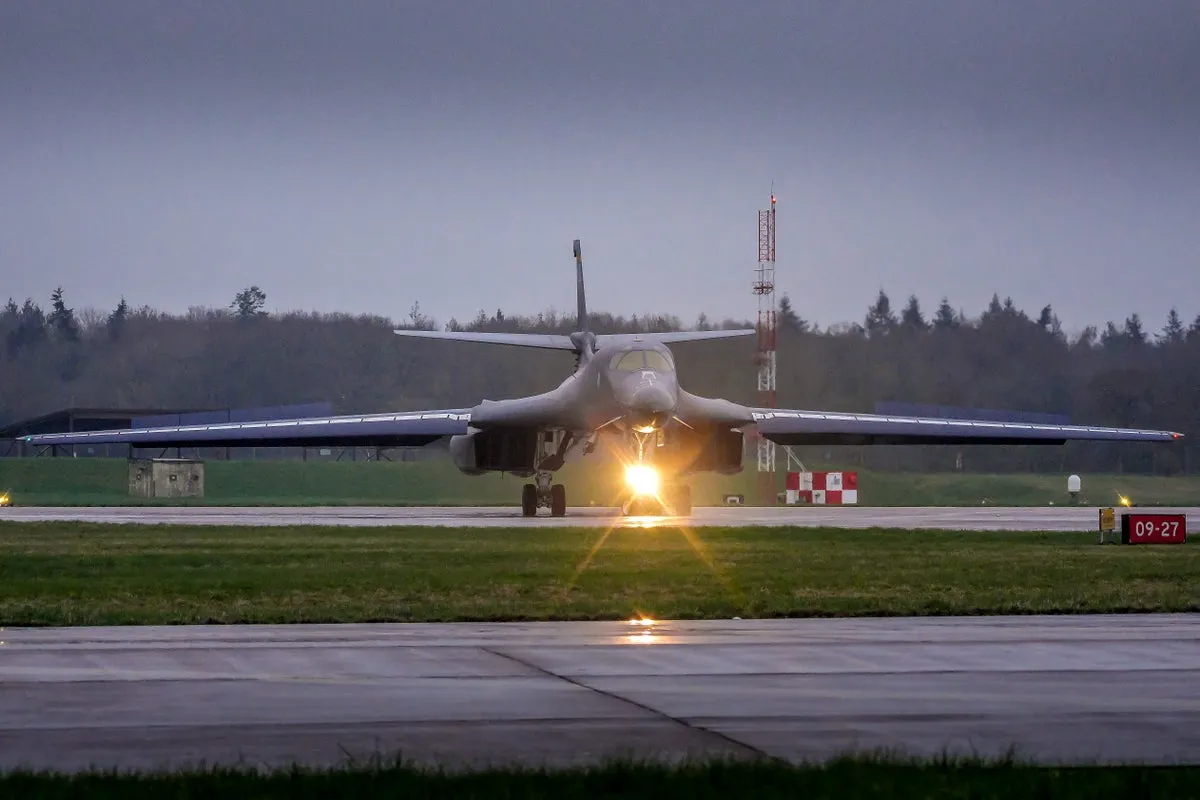
B-1 Bomber Arrives at RAF Fairford
The B-1 Lancer bomber arrived at RAF Fairford in Gloucestershire, UK, on March 6, 2026, amid escalating tensions with Iran. This deployment comes as the United States prepares for possible military actions against Iranian missile sites, following permission granted by UK leader Sir Keir Starmer.
The B-1 Lancer, a supersonic variable-sweep wing heavy bomber, is capable of carrying up to 34 tonnes of weapons and equipment. It has a wingspan of 137 feet and weighs 86 tonnes, allowing it to reach speeds exceeding 900 mph. Piloted by a crew of four, the B-1 is equipped with advanced radar and GPS systems to accurately hit targets.
US Defence Secretary Pete Hegseth has indicated that strikes on Iran are “about to surge dramatically,” reflecting the urgency of the situation. The B-1 Lancer is known for its versatility, having been utilized in various conflicts including Syria, Libya, Afghanistan, and Iraq.
As of now, approximately 6,500 Britons have returned from the UAE since the conflict began, with around 160,000 people registered with the Foreign Office in the region. The UK government has expressed its readiness to assist in defense efforts, with Prime Minister stating, “The UK stands ready to help defend the country should it be needed.”
However, there are concerns about the reliability of US support, as highlighted by Kemi Badenoch, who remarked that “Allies feel they can no longer rely on us.” Sir Keir Starmer has also cautioned that military actions could be unlawful, urging the government to maintain a “cool head” in these tense circumstances.
The B-1 Lancer’s capabilities include carrying 24 cruise missiles, and it features electronic jammers, radar warnings, and a decoy system to protect it from enemy threats. This deployment marks a significant moment in the ongoing geopolitical landscape, as the UK and US coordinate their military strategies in response to Iranian provocations.
Details remain unconfirmed regarding the full extent of the B-1’s mission at RAF Fairford, but its presence underscores the seriousness of the current situation and the potential for increased military engagement in the region.