Introduction
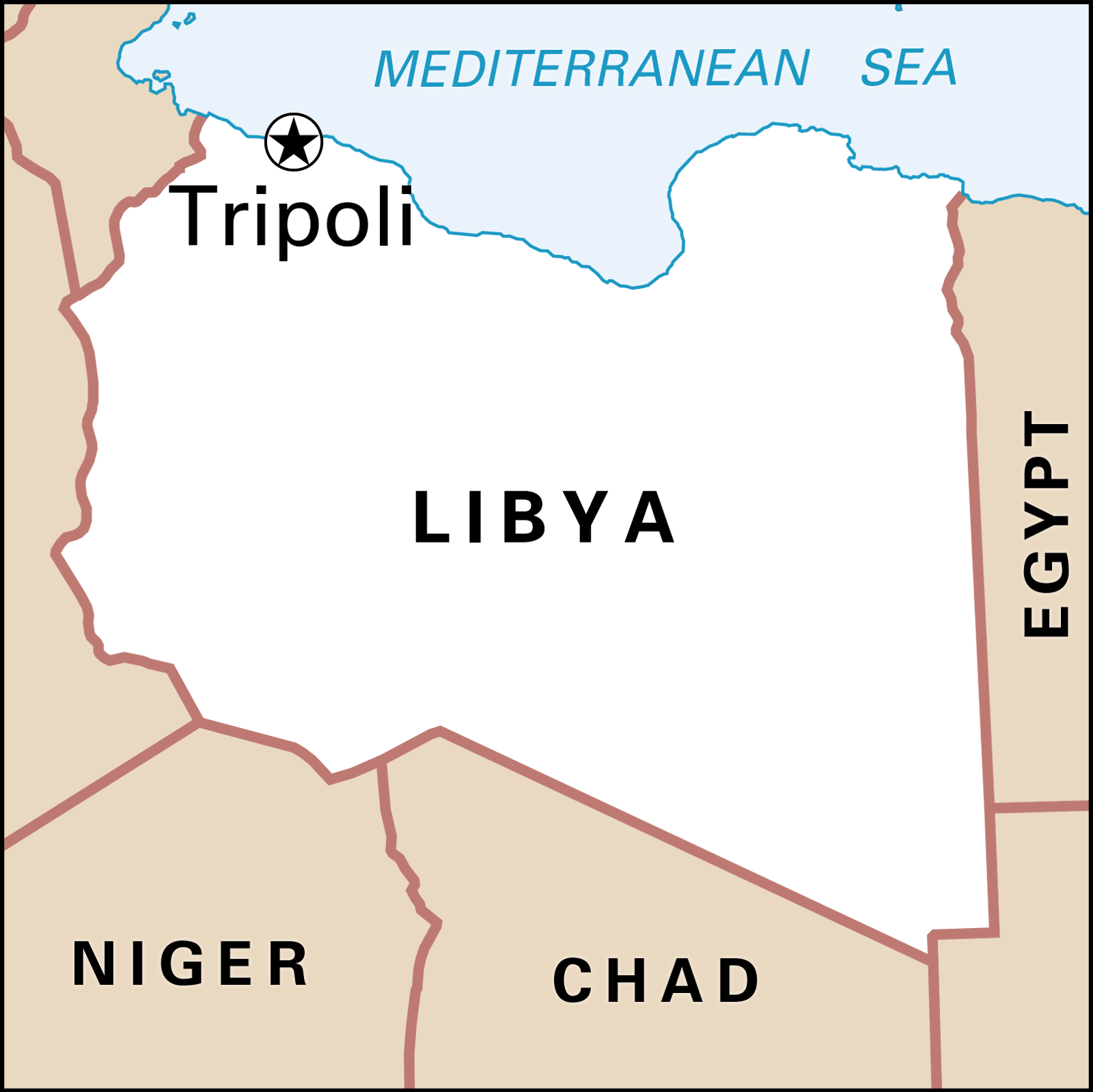
As one of the oldest cities in the world, Tripoli, the capital of Libya, has long served as a cultural and commercial hub in the Mediterranean. Its rich history, beautiful architecture, and strategic position have made it significant for centuries. In recent years, however, Tripoli has faced numerous challenges due to ongoing political instability and conflict. Understanding the current state of this historic city is crucial for grasping the broader socio-political landscape of Libya.
Historical Significance
Tripoli, founded by the Phoenicians around the 7th century BC, has seen the influence of various civilisations, including the Romans, Byzantines, and Ottomans. The city’s old town (medina) boasts beautiful marketplaces, mosques, and historic buildings, reflecting its diverse cultural heritage. In recent years, Tripoli has actively sought to reclaim its historical narrative and restore its monuments, although these efforts are complicated by ongoing turbulence.
Current Political Climate
Since the fall of Muammar Gaddafi in 2011, Libya has struggled to establish a stable government. Tripoli has often been at the epicentre of this instability, with multiple factions vying for control. Recently, a UN-supported government has attempted to unify the country and reduce hostilities, but challenges persist. Armed conflicts and protests have disrupted both daily life and potential tourism, hindering the city’s potential for economic recovery.
Humanitarian Situation
The people of Tripoli are facing severe humanitarian challenges as a result of ongoing conflict. Access to healthcare, education, and basic services has been severely affected. Furthermore, the economic situation has worsened due to continuous clashes, high inflation, and unemployment. Recent reports highlight the resilience of Tripoli’s inhabitants, who maintain efforts to support one another and revive local economies through grassroots initiatives.
Restorative Efforts and Future Outlook
Despite the difficulties, there are glimmers of hope for Tripoli. Several local and international NGOs are engaged in rebuilding efforts, focusing on infrastructure, cultural preservation, and community support. The city’s youth have also taken an active role in promoting peace and cultural events, hoping to foster a more stable environment. Looking ahead, while the path to peace remains fraught with challenges, the resilience of Tripoli’s citizens may provide a strong foundation for future stability and growth.
Conclusion
As Tripoli navigates the complex interplay of history, culture, and modern geopolitical challenges, its story becomes more vital than ever. The international community’s engagement and support will be key to fostering a brighter future for Tripoli and its residents. Understanding the significance of this remarkable city is essential for anyone looking to grasp the current climate of Libya and the broader Middle East.